Aakaar
designed with a collective India in mind But with a past that isn’t cast(e) aside
Clients
Young Designers India
Service:
Industrial Design
Oct 2025
Aakaar
designed with a collective India in mind But with a past that isn’t cast(e) aside
Clients
Young Designers India
Service:
Industrial Design
Oct 2025
Aakaar
designed with a collective India in mind But with a past that isn’t cast(e) aside
Clients
Young Designers India
Service:
Industrial Design
Oct 2025
about
To design a chess set that captures what a modern India represents—without casting aside the indian subcontinent’s millennia of history—was the central challenge of this project. As the lead designer,I set out to guide my team members through a deep exploration of India’s cultural, material, and visual landscape. No stone was left unturned when it came to inspiration. We drew from the interplay of light and shadow, materials ranging from marble to terracotta, and forms that range from the geometric precision of temple carvings to the fluid elegance of everyday objects.
Quietly informing this project was a reflection of the structures of class and hierarchy that have long shaped Indian society, systems that are not only embedded in our cultural history but also in the very framework of the game of chess. These ideas weren’t foregrounded, but they added depth to the narrative, guiding how we thought about symbolism, power, and identity across the set. Each reference was considered not as surface details, but as story—embedded into the structure, symbolism, and functionality of each piece, the board, and the packaging experience.
This project was supported by Young Designers India, in partnership with TEAGUE and Figma. It offered a unique opportunity—not only to share my experience with an ever-growing community of emerging indian designers, but equally to deepen my skills. It allowed me to step into a leadership role, guiding a team while sharpening my approach to art direction and creative direction in a real-world, collaborative setting.
To design a chess set that captures what a modern India represents—without casting aside the indian subcontinent’s millennia of history—was the central challenge of this project. As the lead designer,I set out to guide my team members through a deep exploration of India’s cultural, material, and visual landscape. No stone was left unturned when it came to inspiration. We drew from the interplay of light and shadow, materials ranging from marble to terracotta, and forms that range from the geometric precision of temple carvings to the fluid elegance of everyday objects.
Quietly informing this project was a reflection of the structures of class and hierarchy that have long shaped Indian society, systems that are not only embedded in our cultural history but also in the very framework of the game of chess. These ideas weren’t foregrounded, but they added depth to the narrative, guiding how we thought about symbolism, power, and identity across the set. Each reference was considered not as surface details, but as story—embedded into the structure, symbolism, and functionality of each piece, the board, and the packaging experience.
This project was supported by Young Designers India, in partnership with TEAGUE and Figma. It offered a unique opportunity—not only to share my experience with an ever-growing community of emerging indian designers, but equally to deepen my skills. It allowed me to step into a leadership role, guiding a team while sharpening my approach to art direction and creative direction in a real-world, collaborative setting.
team
Udhbav Bharadwaj
Lead Industrial Designer
Creative Director
Art Director
Ritwiz Sharma
Industrial Designer
3D Visualizer
Shubham Mogdi
Industrial Designer
Aditya Mehra
Industrial Designer
An Embarassment of riches
An Embarassment of riches
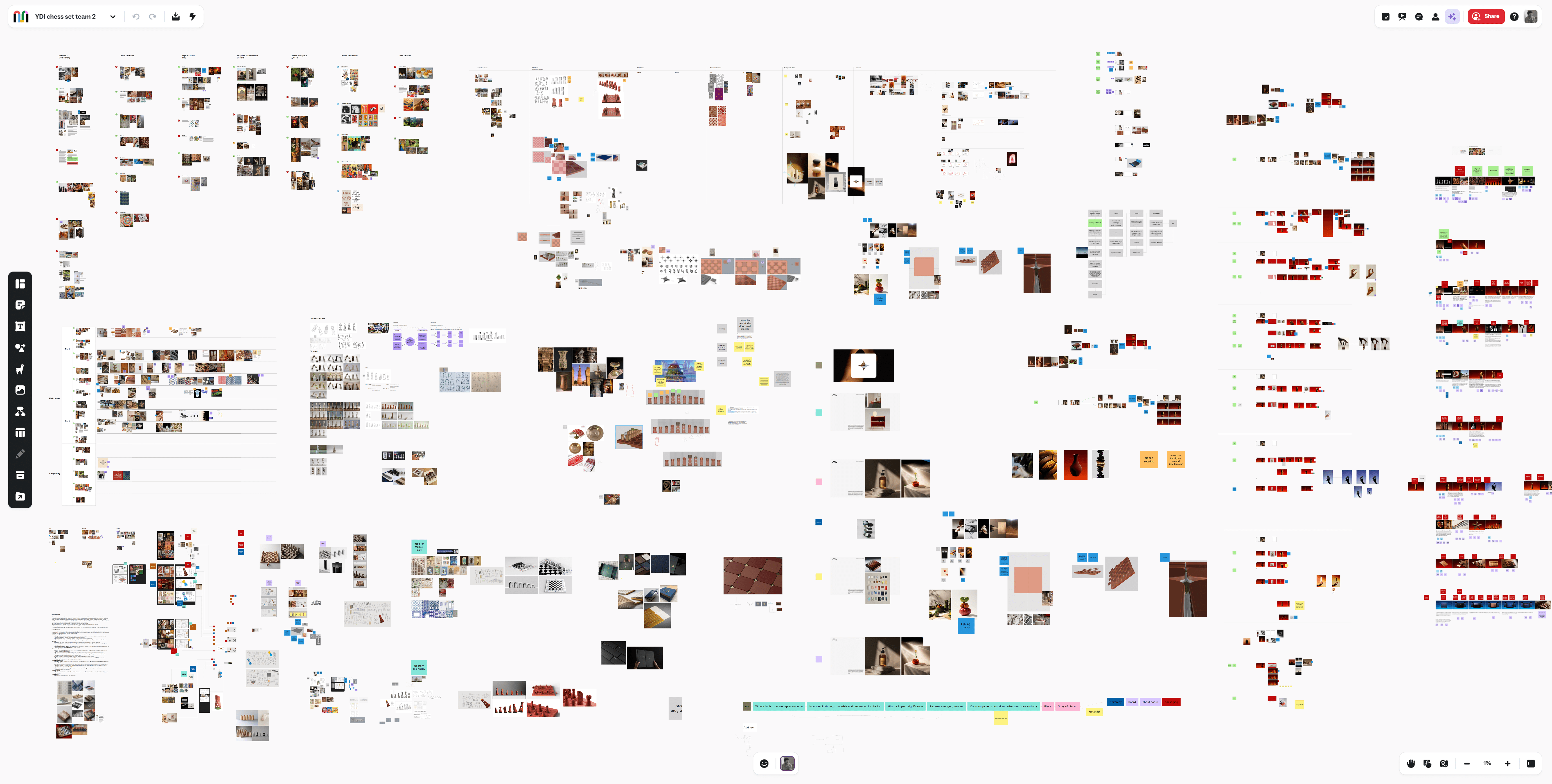
India presents an overwhelming richness of inspiration, one that resists simplification or singular definition. When beginning the process of imagining an Indian-inspired chess set, it quickly became clear that choosing a single source of reference was an almost impossible task. The country offers not one visual language, but countless overlapping ones, each deeply rooted in history, geography, and lived experience. Textiles alone open up worlds of pattern, rhythm, and symbolism. Flora and fauna carry layers of cultural meaning beyond their physical form. Architecture spans eras, materials, and philosophies, from intimate craft to monumental expression. Jewellery speaks through intricacy, proportion, and opulence, while materials themselves shift across regions and traditions.
Beyond the physical, religion and mythology introduce narratives, archetypes, and hierarchies that feel inherently aligned with the structure of chess. Ideas of lavishness coexist with restraint, repetition, and balance, challenging the assumption that richness must always be ornamental. Each potential direction felt equally compelling, and each new reference revealed several more beneath it. Rather than narrowing the field, research only expanded it, making the act of selection feel less like choosing and more like leaving something behind.
This abundance made it difficult to define a single, authoritative source of inspiration. India is not experienced as a monolith, and any attempt to reduce it to one aesthetic or symbolic framework risks oversimplifying its complexity. The inspiration, instead, lay in the sheer plurality itself, in the coexistence of contrasts, scales, and narratives that together form a cultural landscape too vast to be distilled into one reference point.
India presents an overwhelming richness of inspiration, one that resists simplification or singular definition. When beginning the process of imagining an Indian-inspired chess set, it quickly became clear that choosing a single source of reference was an almost impossible task. The country offers not one visual language, but countless overlapping ones, each deeply rooted in history, geography, and lived experience. Textiles alone open up worlds of pattern, rhythm, and symbolism. Flora and fauna carry layers of cultural meaning beyond their physical form. Architecture spans eras, materials, and philosophies, from intimate craft to monumental expression. Jewellery speaks through intricacy, proportion, and opulence, while materials themselves shift across regions and traditions.
Beyond the physical, religion and mythology introduce narratives, archetypes, and hierarchies that feel inherently aligned with the structure of chess. Ideas of lavishness coexist with restraint, repetition, and balance, challenging the assumption that richness must always be ornamental. Each potential direction felt equally compelling, and each new reference revealed several more beneath it. Rather than narrowing the field, research only expanded it, making the act of selection feel less like choosing and more like leaving something behind.
This abundance made it difficult to define a single, authoritative source of inspiration. India is not experienced as a monolith, and any attempt to reduce it to one aesthetic or symbolic framework risks oversimplifying its complexity. The inspiration, instead, lay in the sheer plurality itself, in the coexistence of contrasts, scales, and narratives that together form a cultural landscape too vast to be distilled into one reference point.
India offers an overwhelming richness of inspiration that resists singular definition. When imagining an Indian-inspired chess set, choosing one clear source quickly proved impossible. Textiles unfold into patterns and symbolism, flora and fauna carry layered cultural meaning, and architecture spans craft, monumentality, and geometry. Jewellery speaks through intricacy and proportion, while materials shift across regions and traditions. Religion and mythology introduce archetypes and hierarchies that feel naturally aligned with the structure of chess, and ideas of lavishness coexist with restraint and balance.
Each direction felt equally compelling, and every reference revealed several more beneath it. Research expanded rather than narrowed the field, making selection feel like omission. India is not a monolith, and its inspiration lies in this plurality, where contrasts, scales, and narratives exist simultaneously without resolving into a single source.



Soldier
star
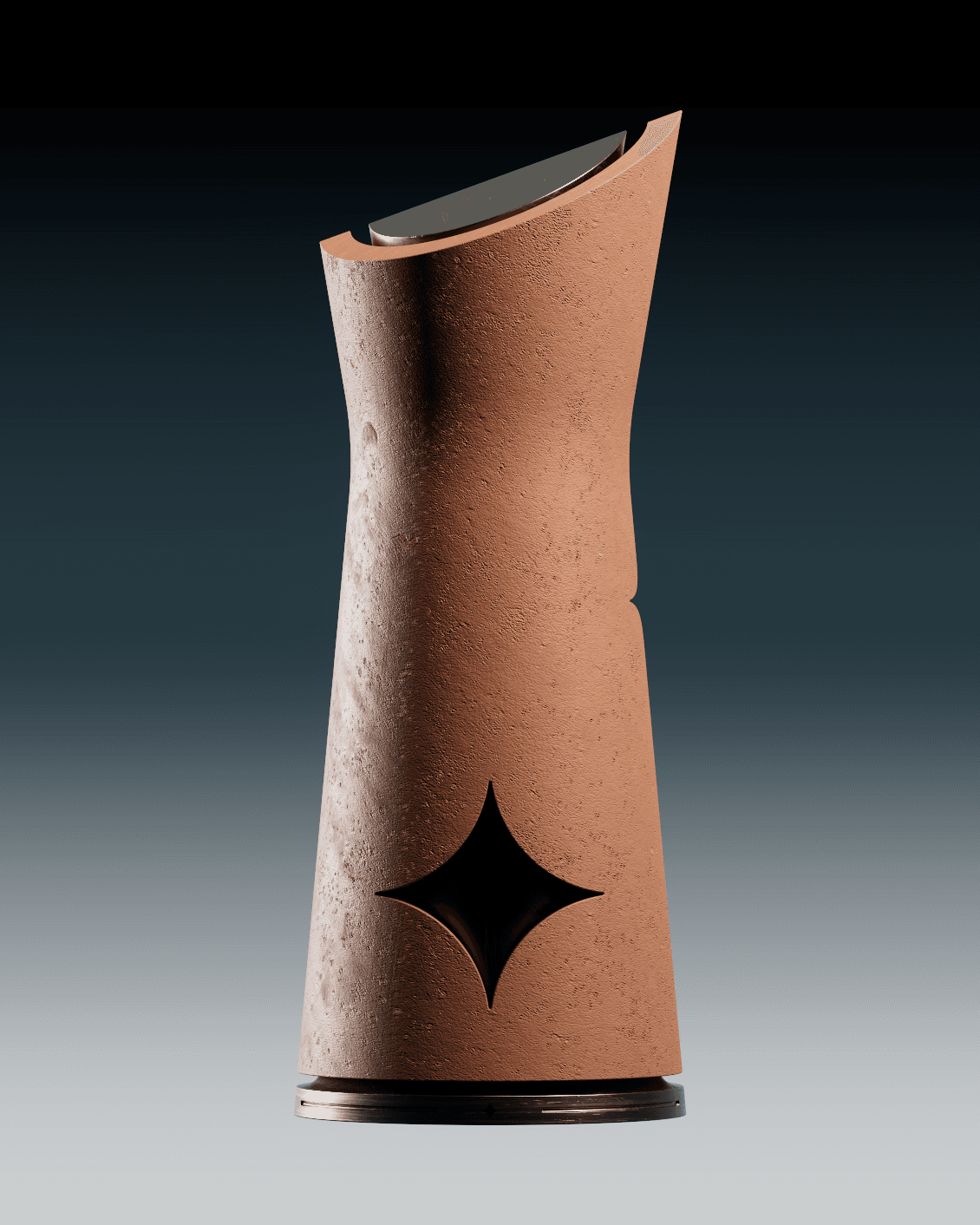
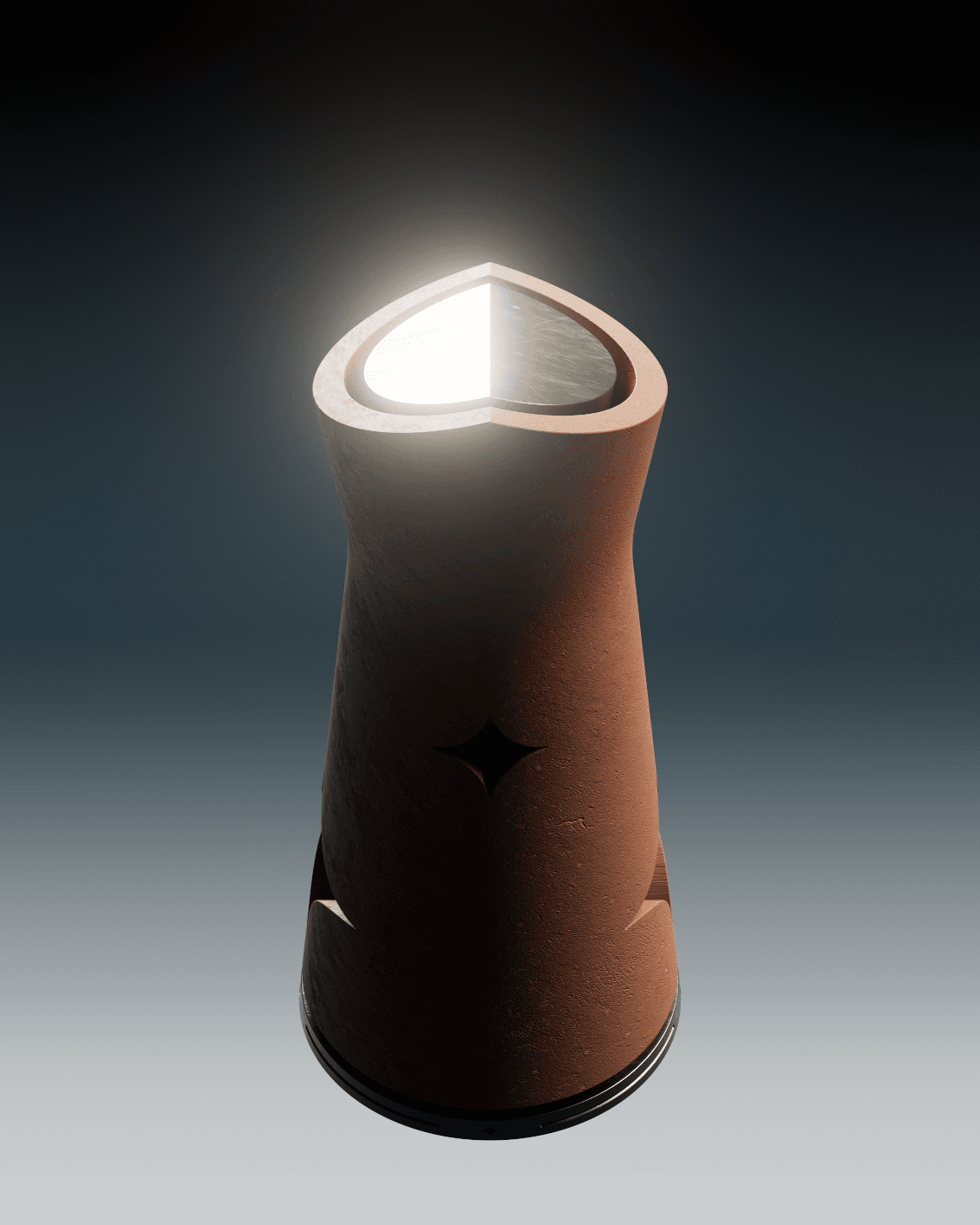
The soldier represents potential—it starts small, slow, and vulnerable, but with the right moves, it can become the most powerful piece on the board. Like the seeker on the path of dharma, its true strength is revealed only through perseverance and transformation. To keep the soldier recognisable, we decided to invert the concept of the spherical head. That space creates a cavity that will be taken advantage of when the soldier completes its journey across the battlefield
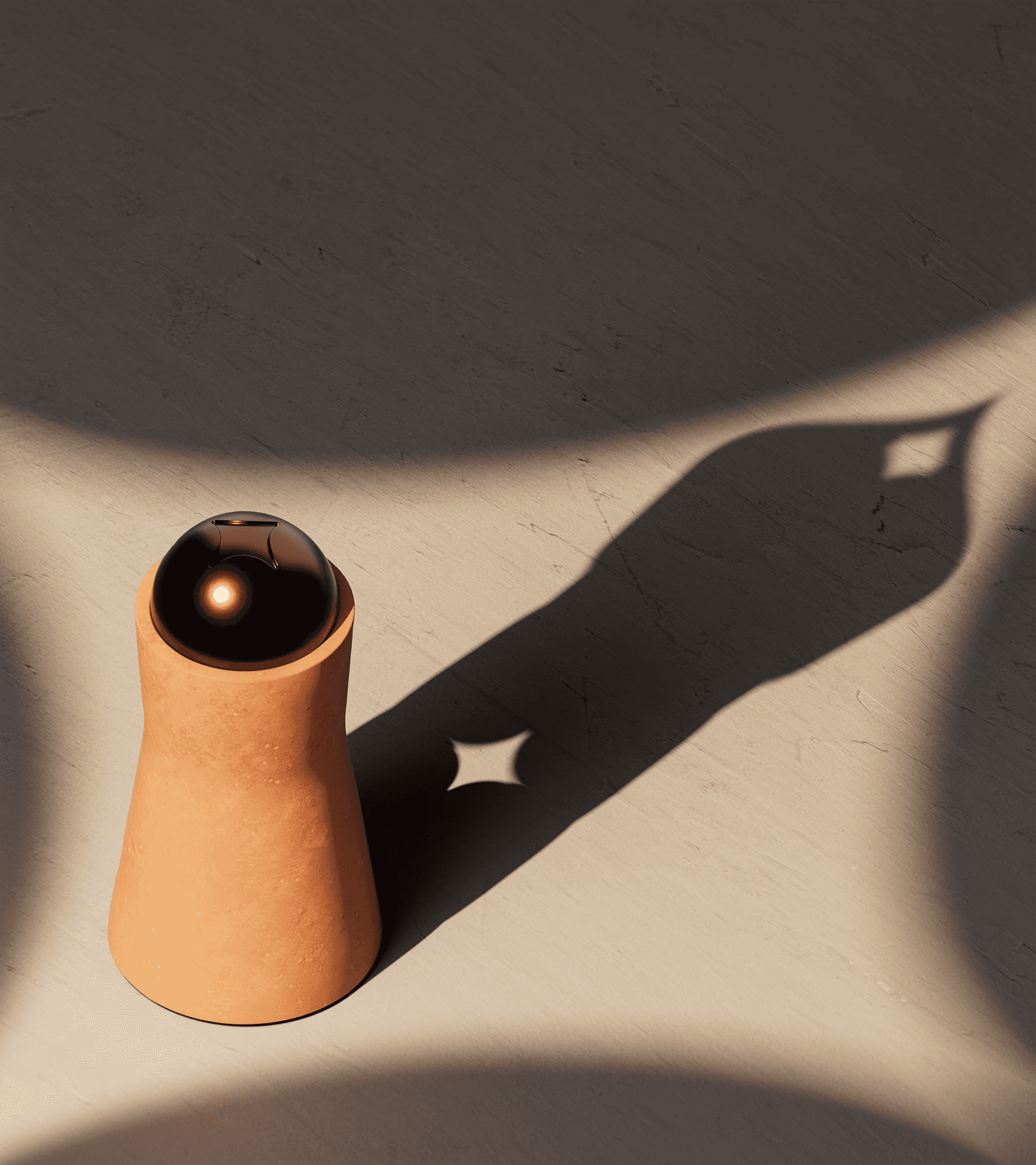
The soldier’s form is intentionally minimal—a quiet presence at the edge of the board. At its top sits a small, open cavity, left deliberately empty. That emptiness isn’t a flaw, it’s an invitation. It beckons the journey ahead. When the soldier reaches the end of the board, that space is filled with a sphere—simple, complete, and etched with a subtle star. The star marks transformation, not just arrival. We chose the ball as a modular insert, not to represent a fixed reward, but to hold possibility. In many cases, the soldier becomes a queen. however there could be some extrnuating circumstances and, its final form is sometimes a horse—nimble, responsive, and unpredictable. It reminds us that growth isn't always about becoming the most powerful—it’s about becoming what the moment asks for.
The soldier represents potential—it starts small, slow, and vulnerable, but with the right moves, it can become the most powerful piece on the board. Like the seeker on the path of dharma, its true strength is revealed only through perseverance and transformation. To keep the soldier recognisable, we decided to invert the concept of the spherical head. That space creates a cavity that will be taken advantage of when the soldier completes its journey across the battlefield
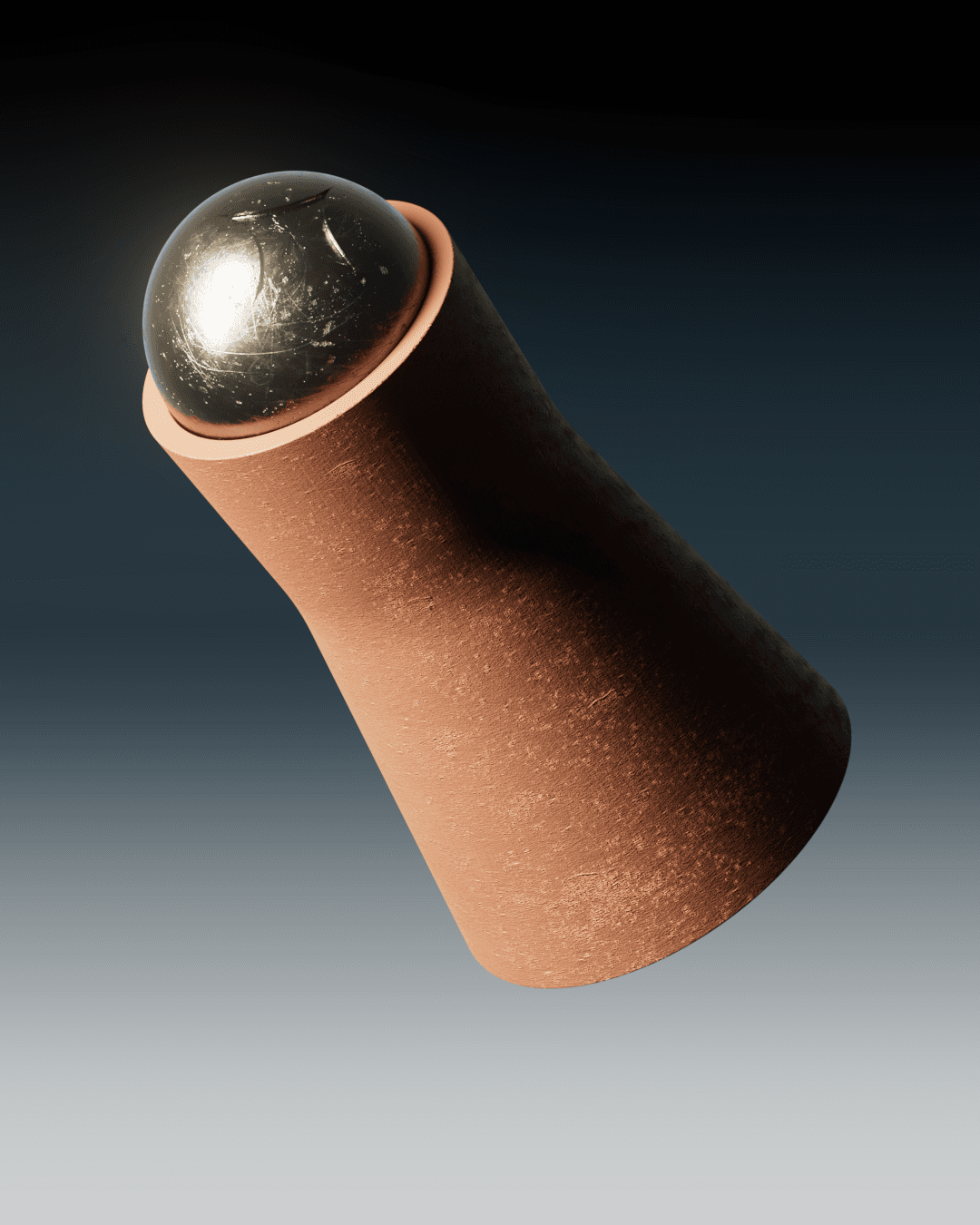
Soldier Ascention to queen
Soldier Ascention to queen
The pawn embodies potential. Its hollowed form anticipates change, allowing a single jewel-like sphere to crown it upon promotion. This gesture turns the pawn to queen transformation into a ritual - one object evolving rather than being replaced - honoring progress, choice, and earned power within the system.
The pawn embodies potential. Its hollowed form anticipates change, allowing a single jewel-like sphere to crown it upon promotion. This gesture turns the pawn to queen transformation into a ritual - one object evolving rather than being replaced - honoring progress, choice, and earned power within the system.
Royalty
built in squeegee
Royalty
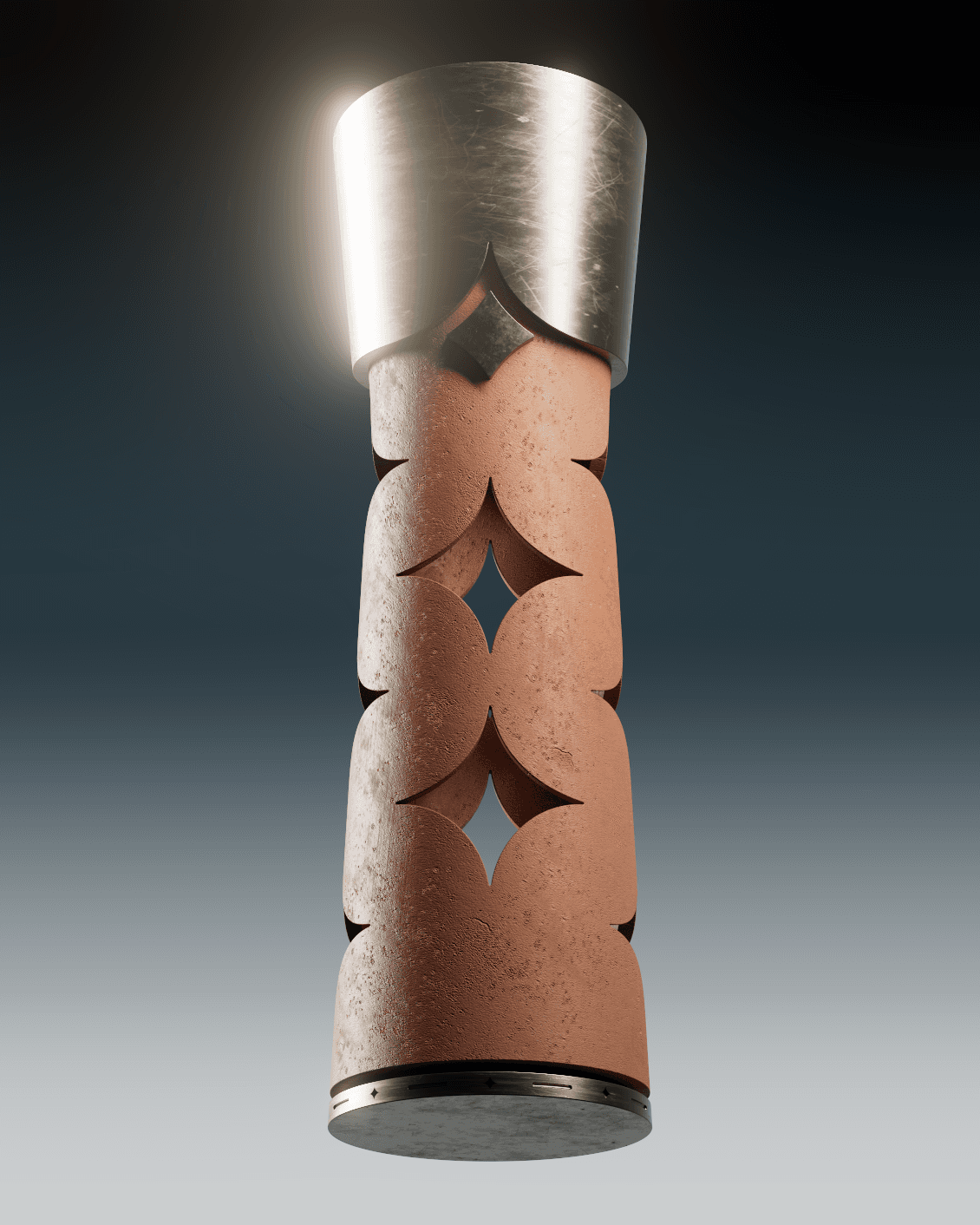
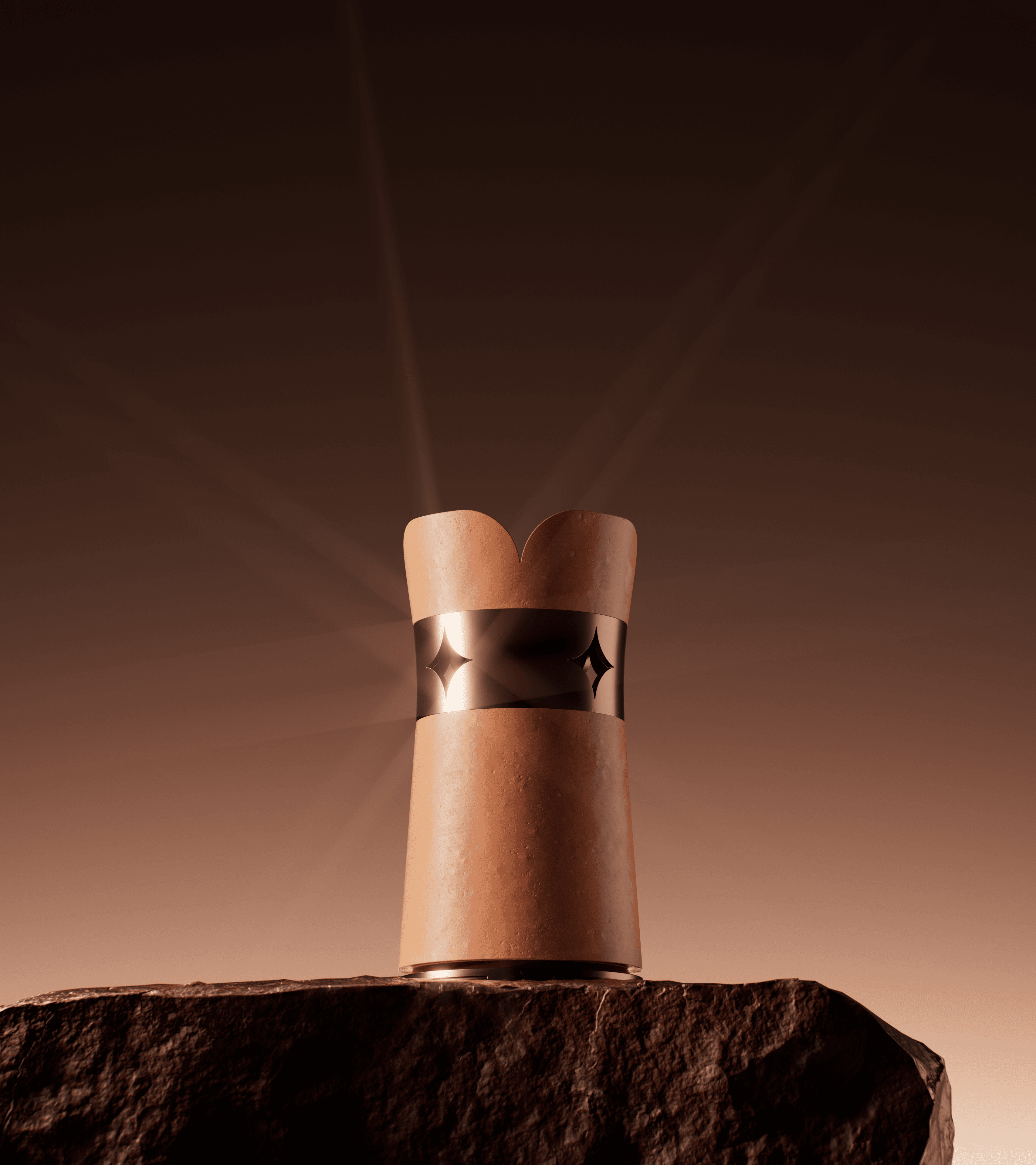
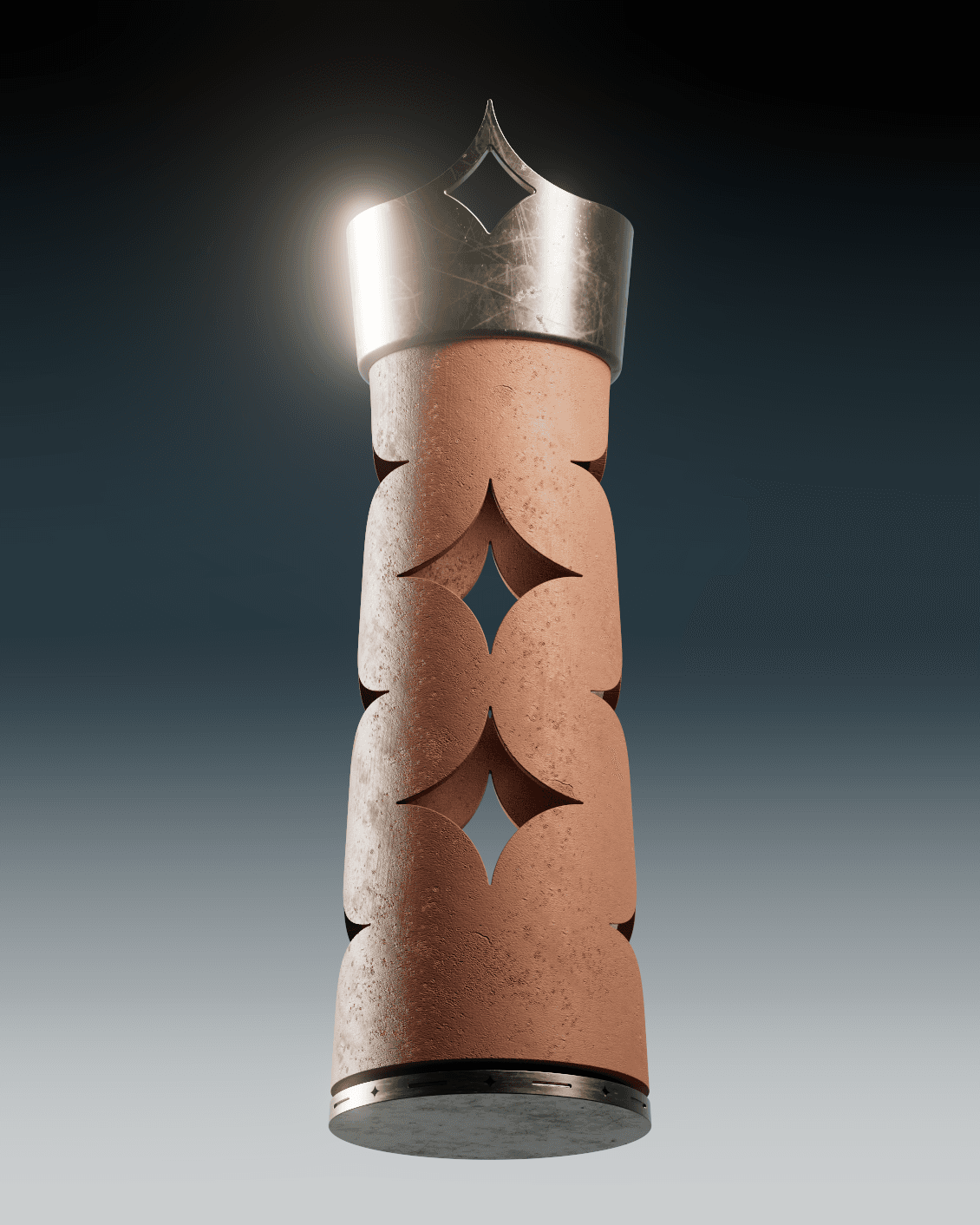
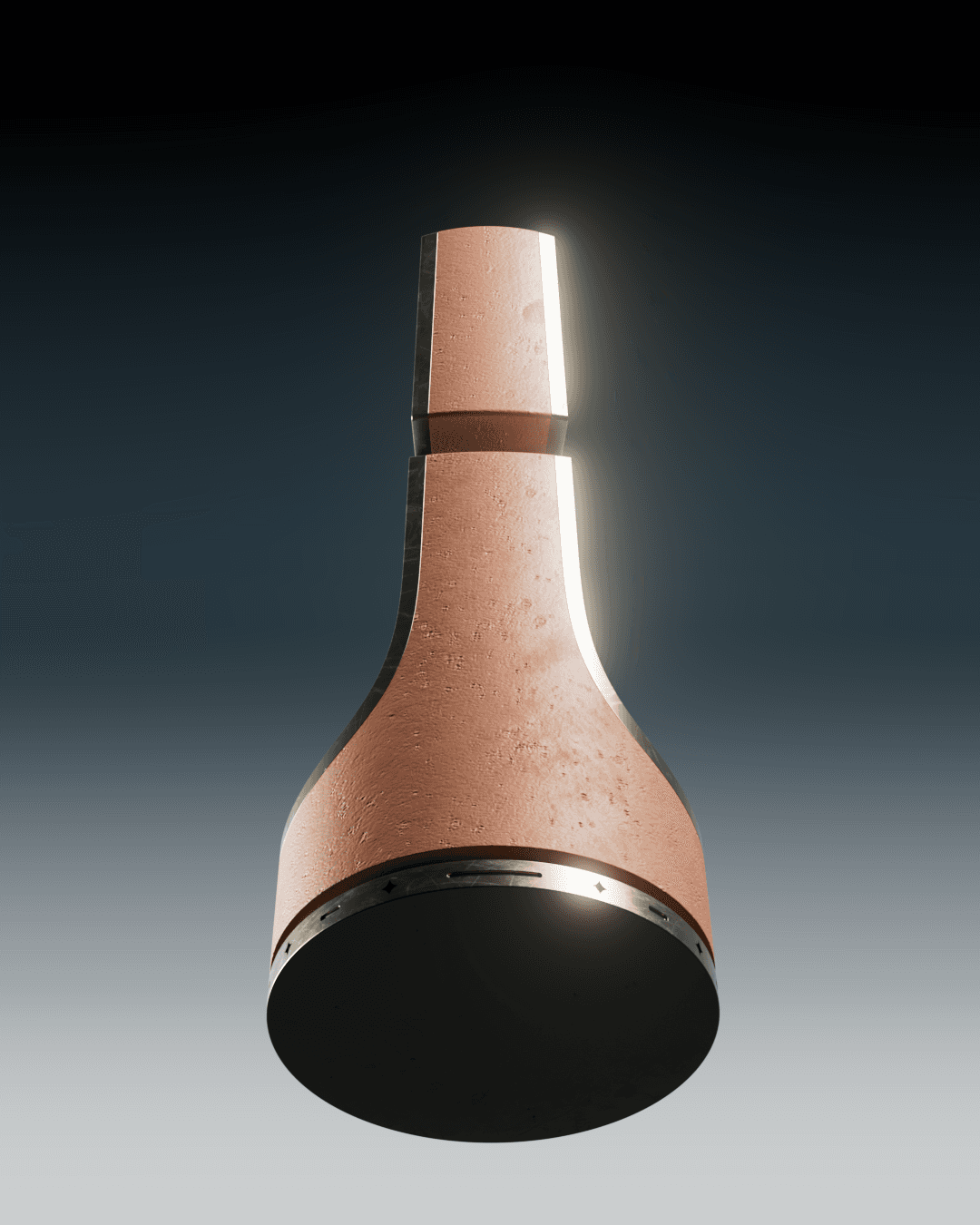
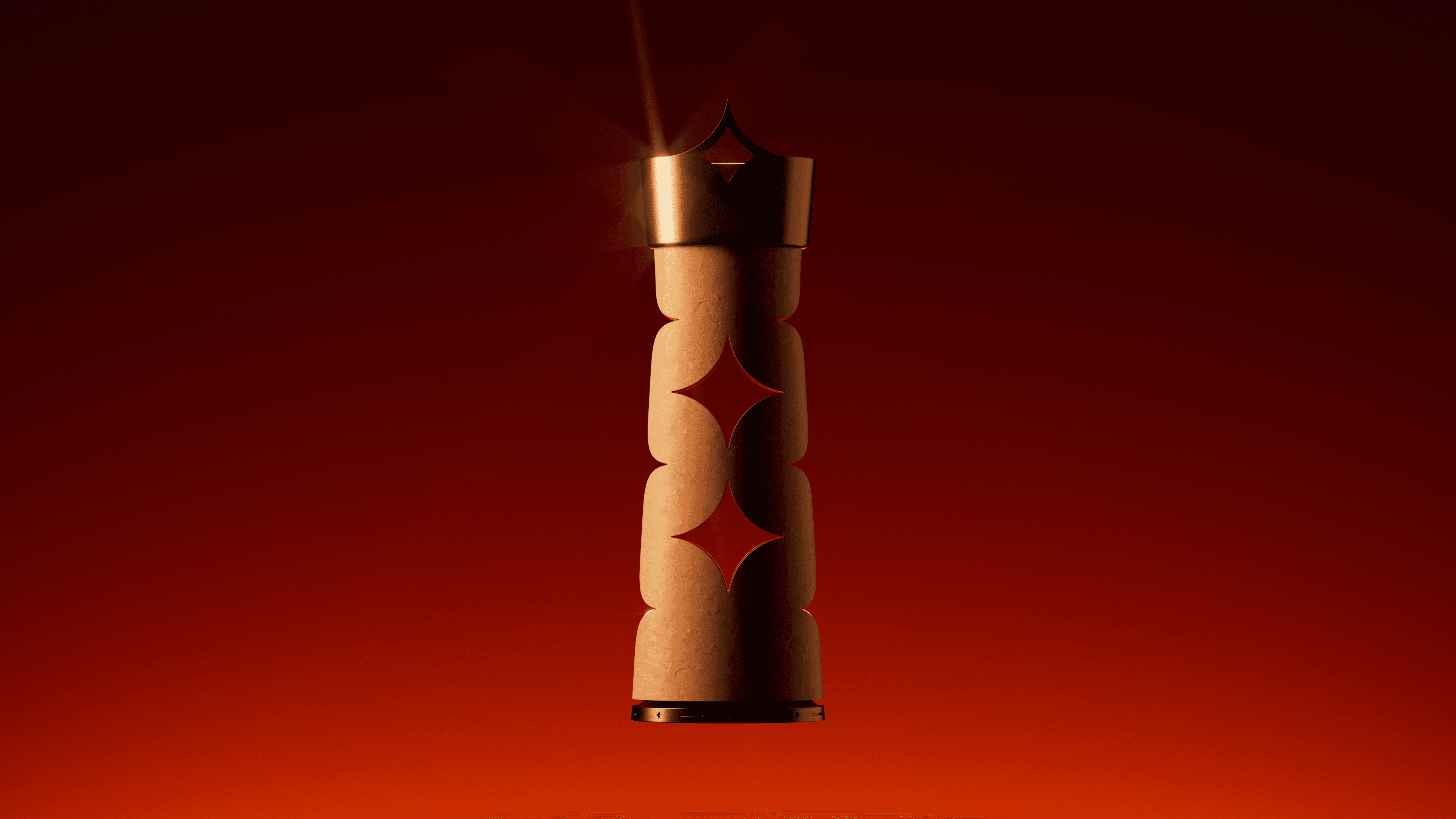
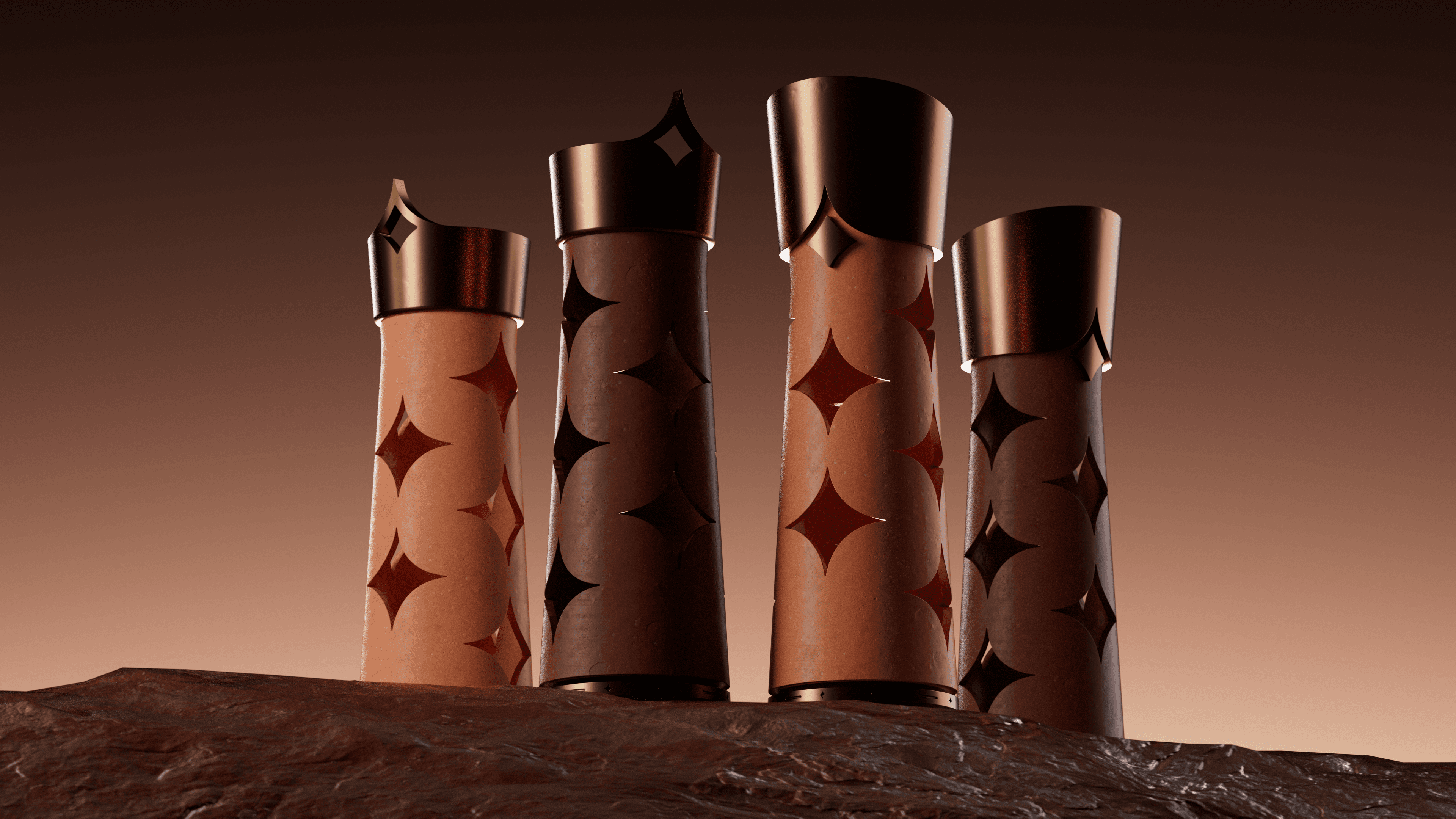
The queen’s tiara holds a subtle cavity—an absence shaped with intention. It mirrors, in exact form, the crown jewel set at the front of the king’s headpiece. This shared geometry isn't ornamental; it’s symbolic. One holds presence, the other, potential. It speaks to the interdependence of power—the idea that sovereignty isn’t singular but shared, that leadership in this system is not about dominance, but balance. In designing the queen, we weren’t interested in simply scaling or feminizing the king. Instead, we created a counterpart whose strength is defined not by mimicry, but by a deliberate resonance. Where the king carries the jewel, the queen carries the space that gives it meaning.
For the king, we deliberately moved away from the conventional European crown and instead drew inspiration from the headpieces worn by Indian rulers—particularly the turbans and sarpech of Mughal emperors, Punjabi maharajas, and Sikh leaders. These weren’t just ornamental—they were deeply symbolic of earned power, lineage, and responsibility. Where a Western crown is often about divine right and inherited rule, the Indian turban is tied, not placed. It signifies a role accepted with weight, not just granted by birth. From a form perspective, these headpieces gave us a layered structure to work with—radial curves, central spines, and vertical lift that could be abstracted into a silhouette both regal and culturally grounded. It allowed us to craft a king that feels local in its authority—one that reflects power not through height or symmetry, but through presence, lineage, and quiet command.
A circular rubber squeegee is integrated into the transparent lid, forming a controlled interface between the tamper and the jar. When the tamper is in use, it prevents liquid from escaping onto the product, the device, the sides of the jar, or the countertop.
By containing the action at the point of interaction, the design maintains cleanliness without introducing additional steps or parts. The result is a more efficient workflow, where less time is spent cleaning and more time is spent engaging with the outcome.
The queen’s tiara holds a subtle cavity—an absence shaped with intention. It mirrors, in exact form, the crown jewel set at the front of the king’s headpiece. This shared geometry isn't ornamental; it’s symbolic. One holds presence, the other, potential. It speaks to the interdependence of power—the idea that sovereignty isn’t singular but shared, that leadership in this system is not about dominance, but balance. In designing the queen, we weren’t interested in simply scaling or feminizing the king. Instead, we created a counterpart whose strength is defined not by mimicry, but by a deliberate resonance. Where the king carries the jewel, the queen carries the space that gives it meaning.
For the king, we deliberately moved away from the conventional European crown and instead drew inspiration from the headpieces worn by Indian rulers—particularly the turbans and sarpech of Mughal emperors, Punjabi maharajas, and Sikh leaders. These weren’t just ornamental—they were deeply symbolic of earned power, lineage, and responsibility. Where a Western crown is often about divine right and inherited rule, the Indian turban is tied, not placed. It signifies a role accepted with weight, not just granted by birth. From a form perspective, these headpieces gave us a layered structure to work with—radial curves, central spines, and vertical lift that could be abstracted into a silhouette both regal and culturally grounded. It allowed us to craft a king that feels local in its authority—one that reflects power not through height or symmetry, but through presence, lineage, and quiet command.
The board
The board
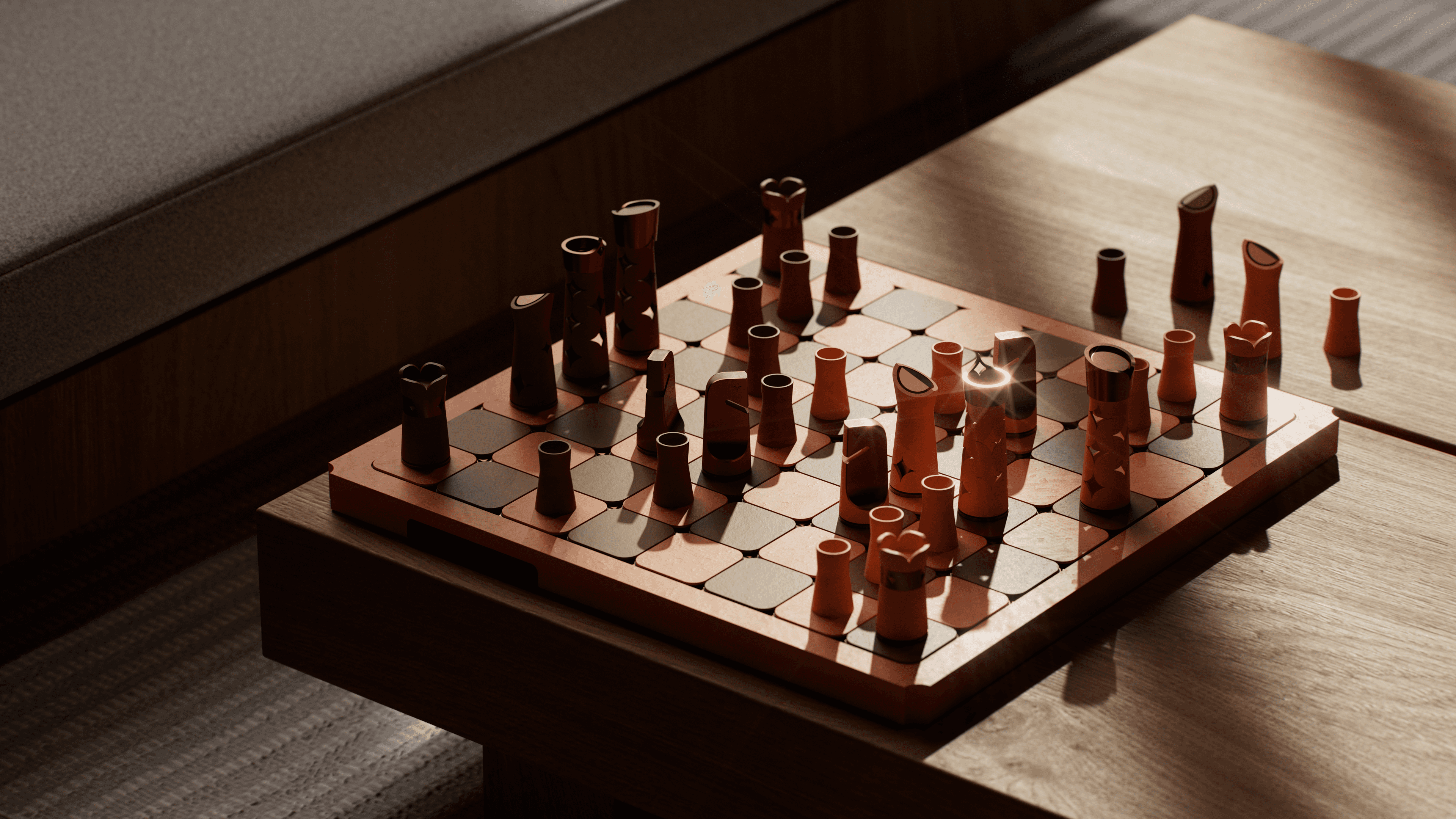
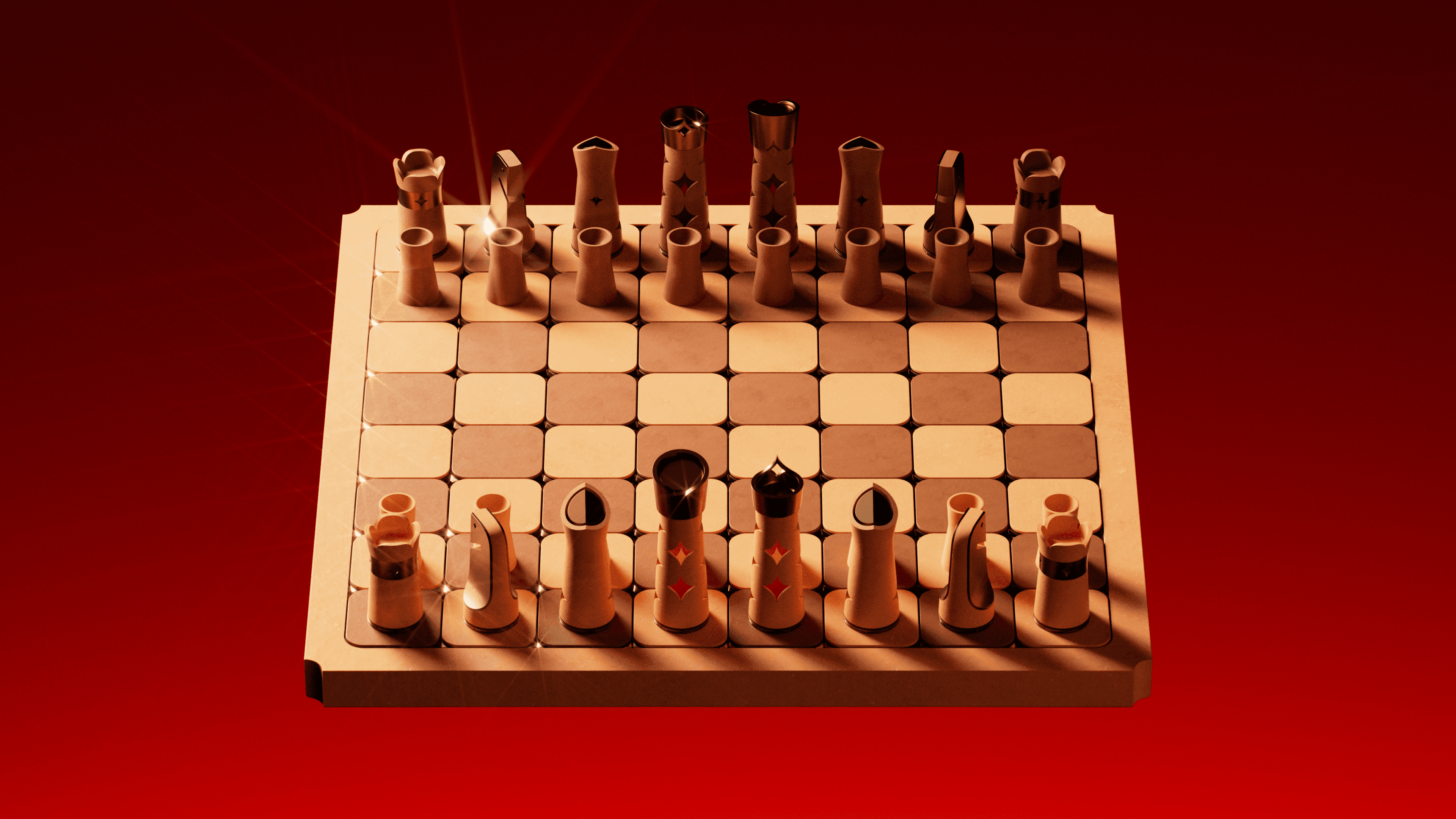
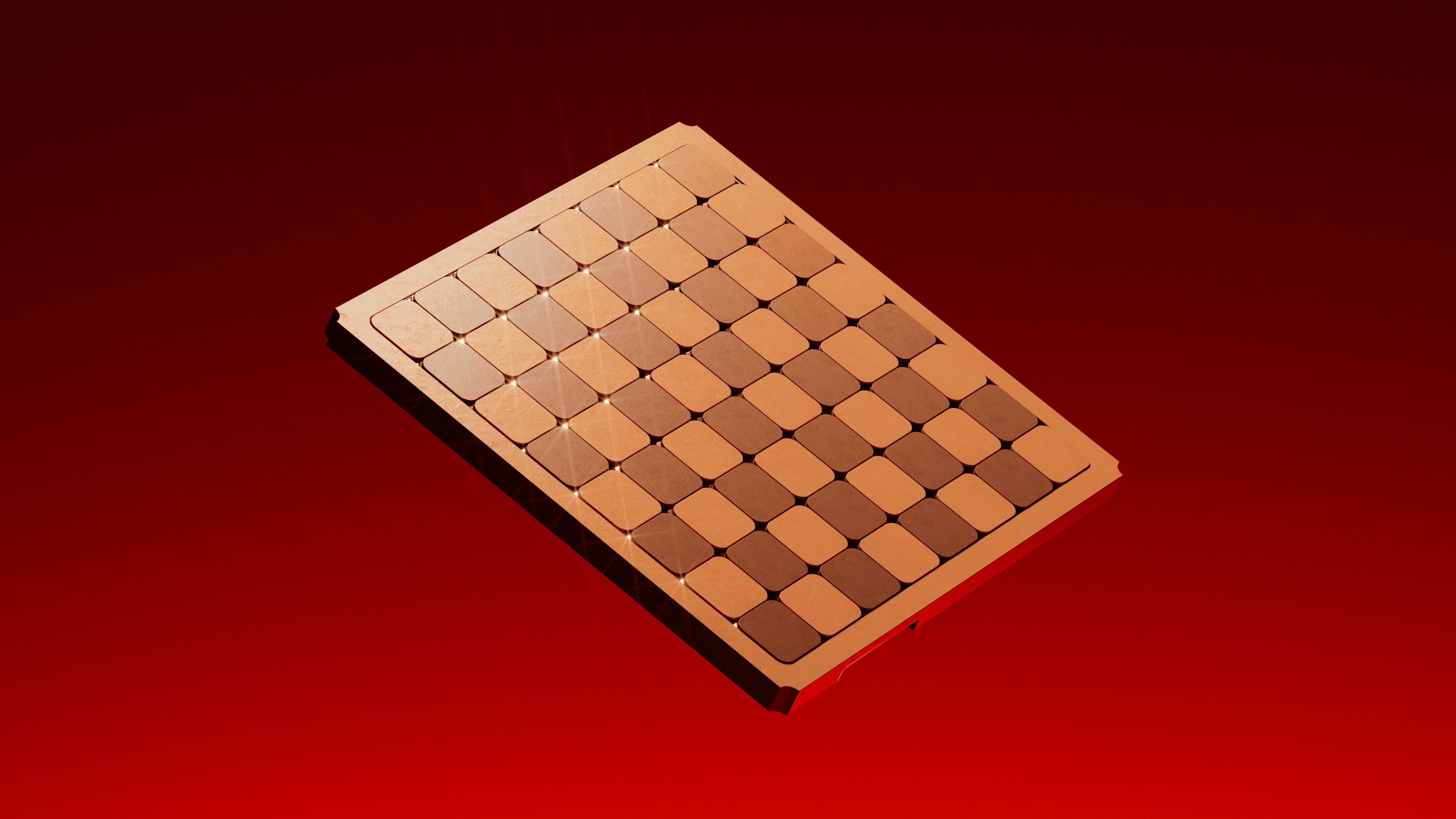
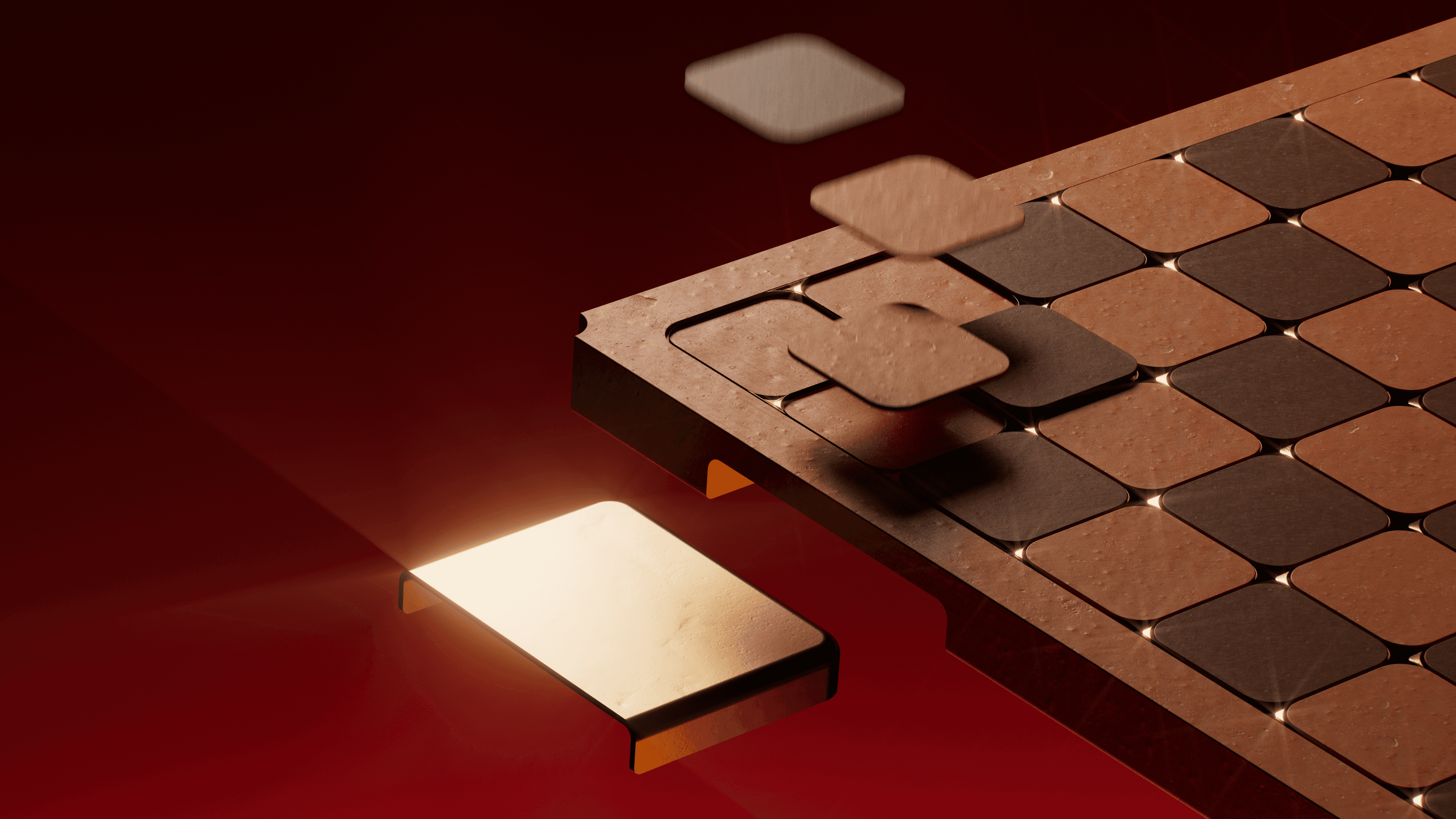
Mirroring the CMF of the chess pieces and its consistent motifs, the chess board resonates and oozes Indian history in a multitude of ways. It carries the same light-and-dark pattern expected of a chess board, while both blending in and standing out. The slightly raised playing surface mimics the architectural rhythm of stepwells, while its flat borders recall the quiet restraint of stone courtyards—framing the game without distraction. In the cavities of the rounded square spaces lies a sunken bronze star that provides depth on many levels—visual, symbolic, and tactile. Designed to shift with light, it changes its aesthetic under different lighting conditions and glistens effortlessly in sunlight.
The board features 49 full stars, evoking the spiritual completeness of 7 cycles of 7, and 28 half-stars, subtly nodding to the 28-day lunar cycle and the rhythm of time as understood in Indian tradition. Together, they form a quiet grid of cosmic order—rooted in astrology, philosophy, and ritual symmetry.
Mirroring the CMF of the chess pieces and its consistent motifs, the chess board resonates and oozes Indian history in a multitude of ways. It carries the same light-and-dark pattern expected of a chess board, while both blending in and standing out. The slightly raised playing surface mimics the architectural rhythm of stepwells, while its flat borders recall the quiet restraint of stone courtyards—framing the game without distraction. In the cavities of the rounded square spaces lies a sunken bronze star that provides depth on many levels—visual, symbolic, and tactile. Designed to shift with light, it changes its aesthetic under different lighting conditions and glistens effortlessly in sunlight.
The board features 49 full stars, evoking the spiritual completeness of 7 cycles of 7, and 28 half-stars, subtly nodding to the 28-day lunar cycle and the rhythm of time as understood in Indian tradition. Together, they form a quiet grid of cosmic order—rooted in astrology, philosophy, and ritual symmetry.

Bronze Details
Bronze Details
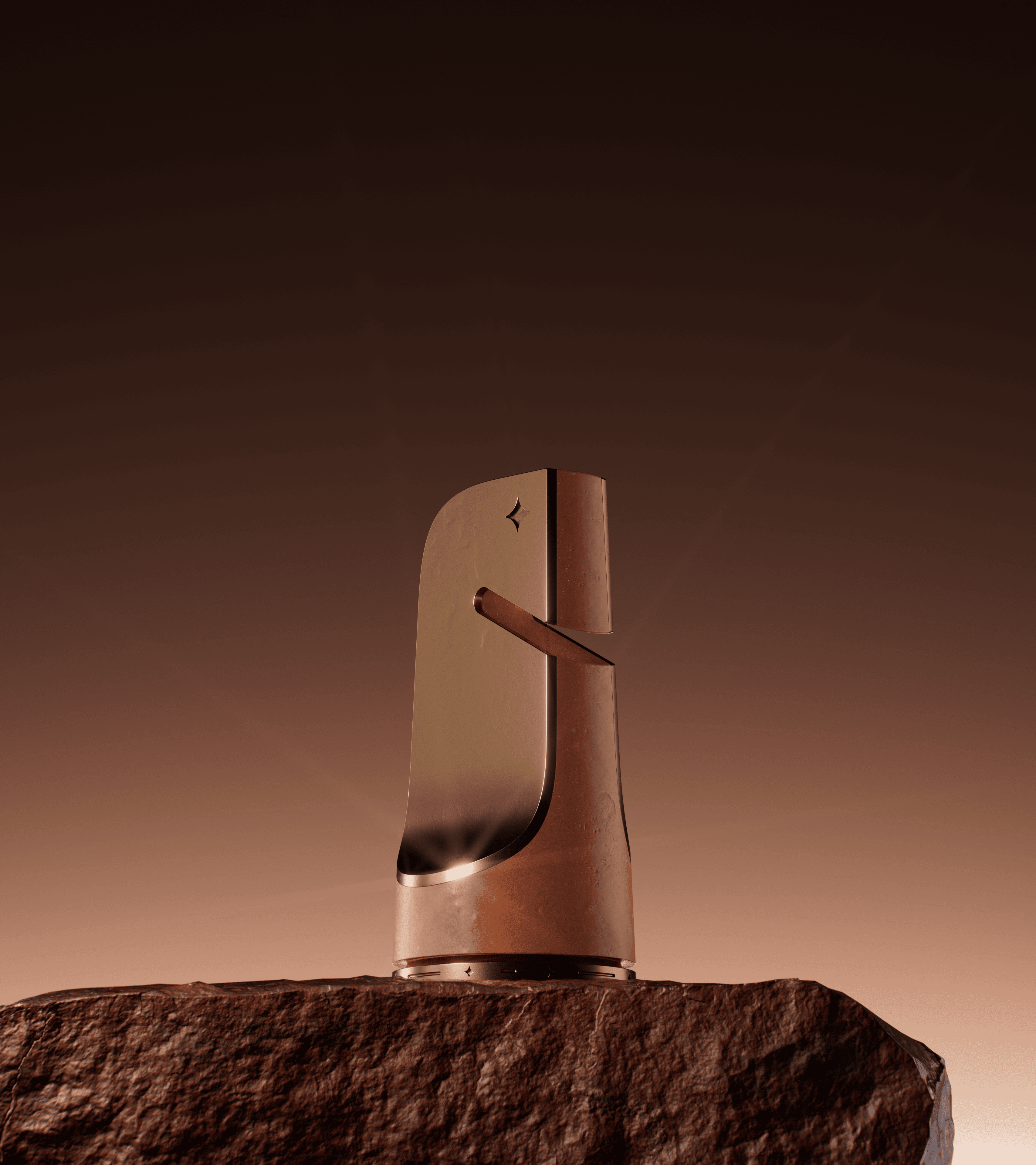
Bronze held a foundational place in Indian material culture, valued for its strength, malleability, and ceremonial luster. In ancient warfare and mobility, horses were adorned with bronze accessories—bits, bridles, and ornamental fittings—crafted for both function and status, often engraved or cast with regional motifs.
Bronze coins, depending on the era and dynasty, were either struck using simple stamping techniques or intricately shaped through the lost wax method, especially in the post-Mauryan period. Across regions, bronze was the preferred alloy for daggers, swords, and even elements of armor, prized during the Bronze Age for its resistance to corrosion and ability to hold a sharpened edge without brittleness.
In the South, particularly in Tamil Nadu, bronze became the sacred metal of divine form—idols and temple lamps were, and still are, cast using the lost wax method, a process chosen not only for its detail but for the way bronze captures gesture and grace in a way few other metals can.
Bronze held a foundational place in Indian material culture, valued for its strength, malleability, and ceremonial luster. In ancient warfare and mobility, horses were adorned with bronze accessories—bits, bridles, and ornamental fittings—crafted for both function and status, often engraved or cast with regional motifs.
Bronze coins, depending on the era and dynasty, were either struck using simple stamping techniques or intricately shaped through the lost wax method, especially in the post-Mauryan period. Across regions, bronze was the preferred alloy for daggers, swords, and even elements of armor, prized during the Bronze Age for its resistance to corrosion and ability to hold a sharpened edge without brittleness.
In the South, particularly in Tamil Nadu, bronze became the sacred metal of divine form—idols and temple lamps were, and still are, cast using the lost wax method, a process chosen not only for its detail but for the way bronze captures gesture and grace in a way few other metals can.
Bronze held a foundational place in Indian material culture, valued for its strength, malleability, and ceremonial luster. In ancient warfare and mobility, horses were adorned with bronze accessories—bits, bridles, and ornamental fittings—crafted for both function and status, often engraved or cast with regional motifs.
Bronze coins, depending on the era and dynasty, were either struck using simple stamping techniques or intricately shaped through the lost wax method, especially in the post-Mauryan period. Across regions, bronze was the preferred alloy for daggers, swords, and even elements of armor, prized during the Bronze Age for its resistance to corrosion and ability to hold a sharpened edge without brittleness.
In the South, particularly in Tamil Nadu, bronze became the sacred metal of divine form—idols and temple lamps were, and still are, cast using the lost wax method, a process chosen not only for its detail but for the way bronze captures gesture and grace in a way few other metals can.

Packaging
built in squeegee
Packaging
In Indian culture, gift-giving is inseparable from moments of celebration—an expression of care, joy, and shared tradition. We designed this box to echo the feeling of receiving a box of sweets: familiar, festive, and full of delight. It’s a gesture meant to spark the same warmth, laughter, and anticipation that fills the air during the festive season.
The board features 49 full stars, evoking the spiritual completeness of 7 cycles of 7, and 28 half-stars, subtly nodding to the 28-day lunar cycle and the rhythm of time as understood in Indian tradition. Together, they form a quiet grid of cosmic order—rooted in astrology, philosophy, and ritual symmetry.
A circular rubber squeegee is integrated into the transparent lid, forming a controlled interface between the tamper and the jar. When the tamper is in use, it prevents liquid from escaping onto the product, the device, the sides of the jar, or the countertop.
By containing the action at the point of interaction, the design maintains cleanliness without introducing additional steps or parts. The result is a more efficient workflow, where less time is spent cleaning and more time is spent engaging with the outcome.
In Indian culture, gift-giving is inseparable from moments of celebration—an expression of care, joy, and shared tradition. We designed this box to echo the feeling of receiving a box of sweets: familiar, festive, and full of delight. It’s a gesture meant to spark the same warmth, laughter, and anticipation that fills the air during the festive season.
The board features 49 full stars, evoking the spiritual completeness of 7 cycles of 7, and 28 half-stars, subtly nodding to the 28-day lunar cycle and the rhythm of time as understood in Indian tradition. Together, they form a quiet grid of cosmic order—rooted in astrology, philosophy, and ritual symmetry.
design notes
built in squeegee
The unboxing begins with a deep peacock blue—rich, regal, and unmistakably Indian. As the sides lift away, a thick sheet reveals itself, emblazoned with a single bronze star. Cutouts scattered across its surface align perfectly with the star motifs on the board below, creating a layered, jali-like experience that plays with light and shadow. Beneath this sheet lies the chessboard, catching the light as it’s unveiled, its surface glimmering within a precisely cut wooden frame that offers both protection and quiet ceremony. Under the board, a muted, oversized pattern hints at a deeper reveal—an invitation to keep exploring. Finally, the pieces appear, resting on an angled platform that faces the players. They're easy to lift, ready to be placed into play, arranged to maintain the ritual of the game while enhancing its tactility and joy.
A circular rubber squeegee is integrated into the transparent lid, forming a controlled interface between the tamper and the jar. When the tamper is in use, it prevents liquid from escaping onto the product, the device, the sides of the jar, or the countertop.
By containing the action at the point of interaction, the design maintains cleanliness without introducing additional steps or parts. The result is a more efficient workflow, where less time is spent cleaning and more time is spent engaging with the outcome.
The unboxing begins with a deep peacock blue—rich, regal, and unmistakably Indian. As the sides lift away, a thick sheet reveals itself, emblazoned with a single bronze star. Cutouts scattered across its surface align perfectly with the star motifs on the board below, creating a layered, jali-like experience that plays with light and shadow. Beneath this sheet lies the chessboard, catching the light as it’s unveiled, its surface glimmering within a precisely cut wooden frame that offers both protection and quiet ceremony. Under the board, a muted, oversized pattern hints at a deeper reveal—an invitation to keep exploring. Finally, the pieces appear, resting on an angled platform that faces the players. They're easy to lift, ready to be placed into play, arranged to maintain the ritual of the game while enhancing its tactility and joy.