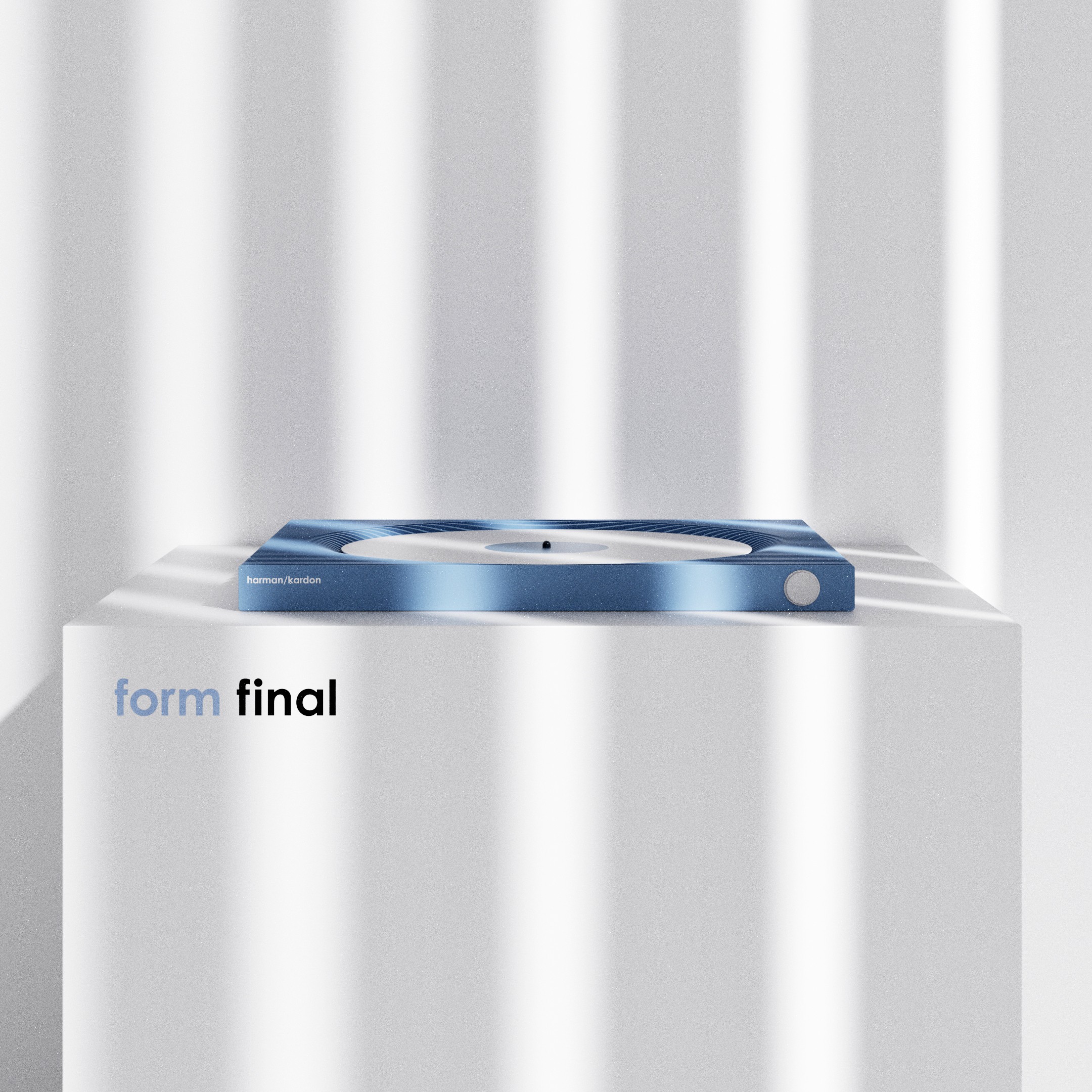
Harman Kardon has long been synonymous with defining the audio experience. In the mid-1970s, turntables and tonearms formed the foundation of the brand’s identity. In more recent years, however, the brand has stepped away from this space.
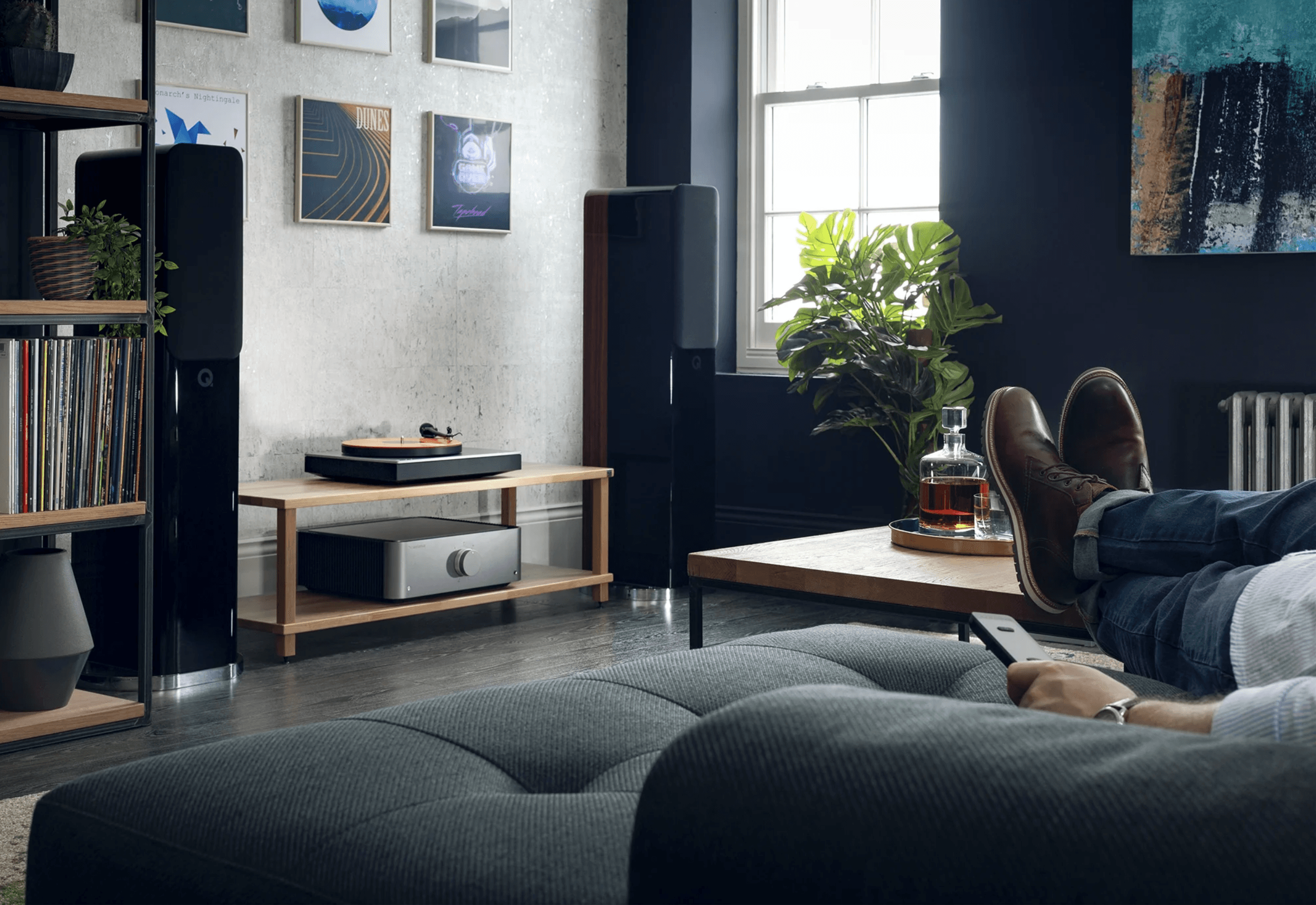
With the turn of the decade and the resurgence of late 20th-century cultural and design sensibilities, this moment presents an opportunity to reclaim that legacy in its purest form. A return to vinyl is not nostalgic by accident. It is intentional, tactile, and deeply experiential.
The goal was to create an audio experience that would disrupt the market by reimagining how vinyl from the past, present, and future is heard. The vinyl experience extends beyond sound alone. It engages multiple senses. From browsing in a record store to the weight and texture of a record in hand, each interaction adds meaning and prestige to the act of listening, elevating it from consumption to ritual.

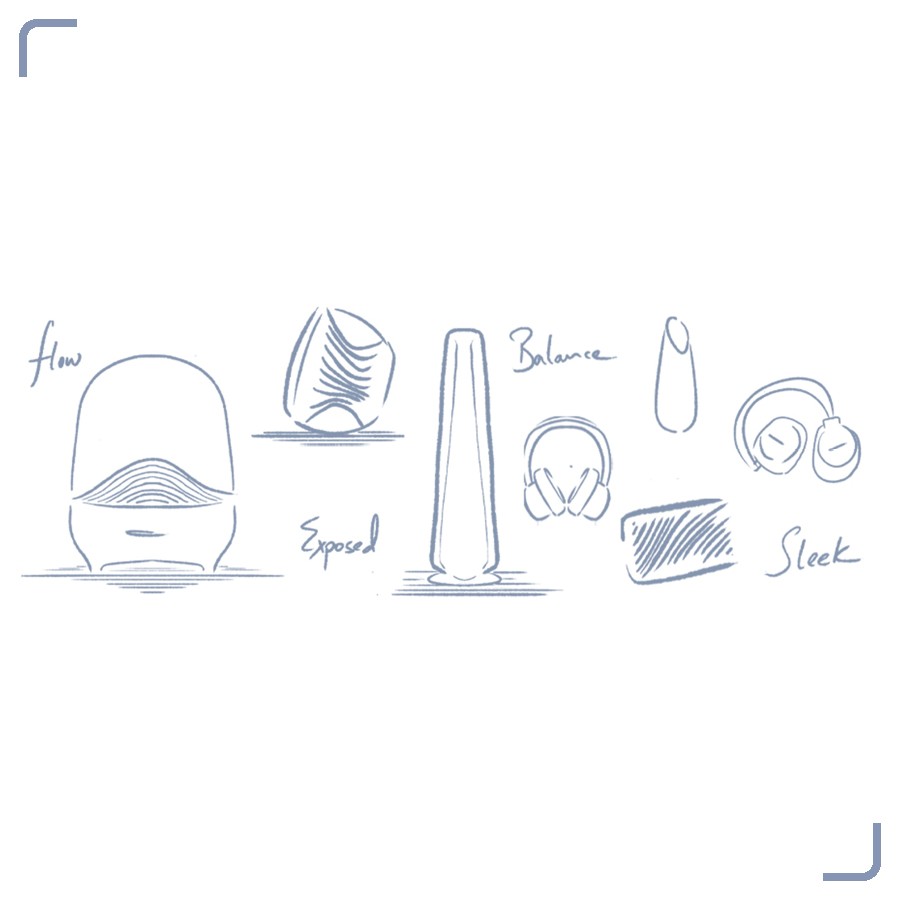
WHAT IS SOUND IN ITS SIMPLIEST FORM?
A line, in its simplest form, represents direction.
When lines exist together, they begin to suggest movement.
A song is composed of multiple movements layered together, creating rhythm, flow, and the emotional cadence experienced as a record plays. Sound becomes motion over time.
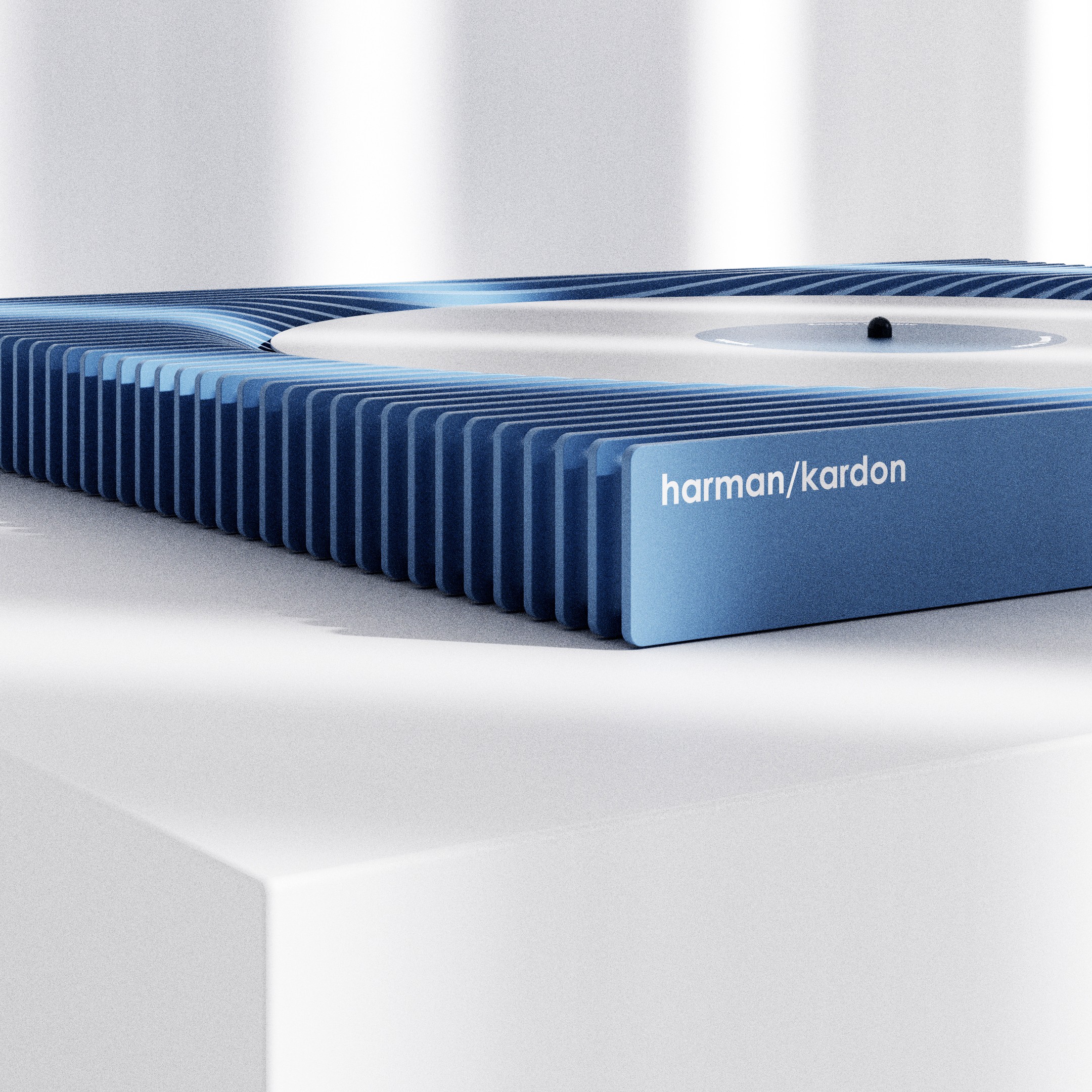
Movement extends beyond sound into three dimensions. It exists as abstract linear flows in architecture, seen in the sweeping forms of Zaha Hadid’s building in Baku. Flow and movement are inseparable, expressed across scales and contexts. From erosion carving canyons, to sand shifting across the Sahara, to clouds drifting over mountains, to water slipping from leaves in a forest canopy, motion is constant and ever-present.
Movement is often visualized through waves. Whether it is a body moving through water or standing still within it, ripples emerge. Even in foundational physics, a tuning fork sends waves outward from a single point, or a particle occupies space through oscillation. Everything exists in waves.


needle
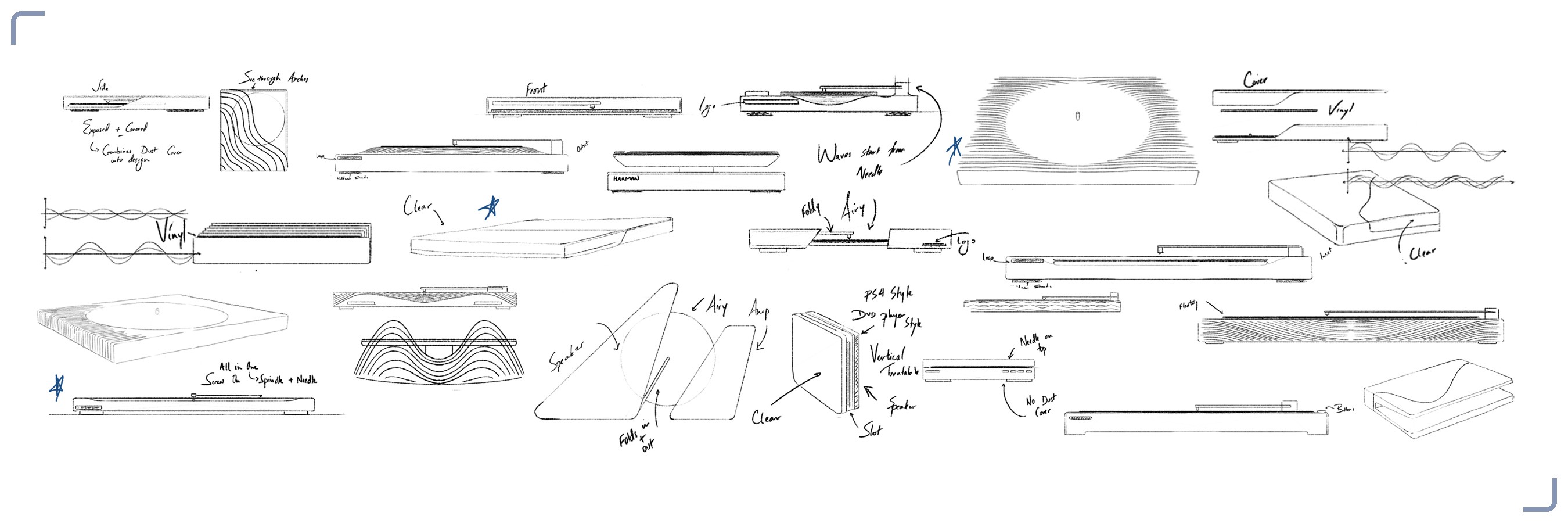
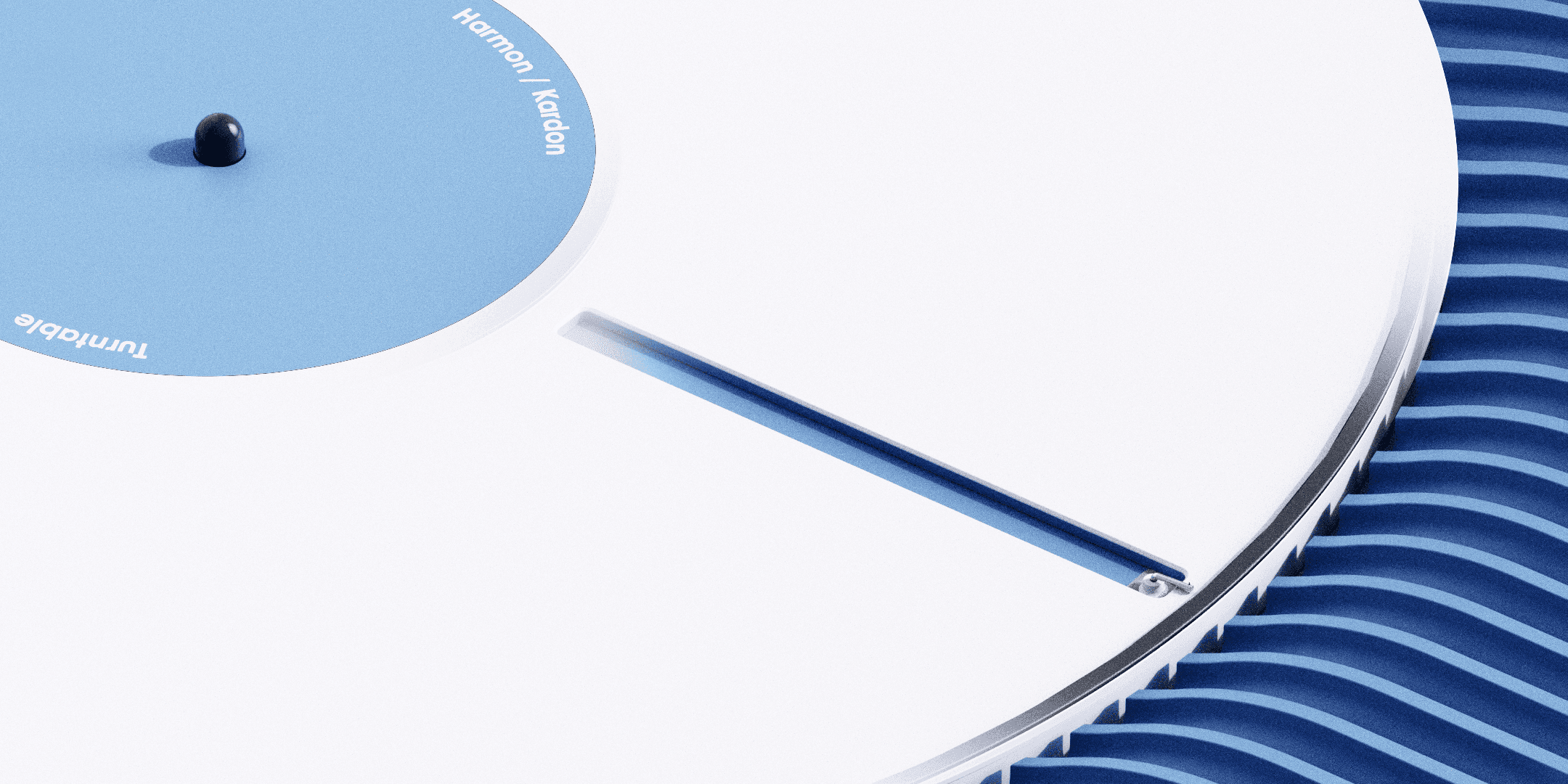
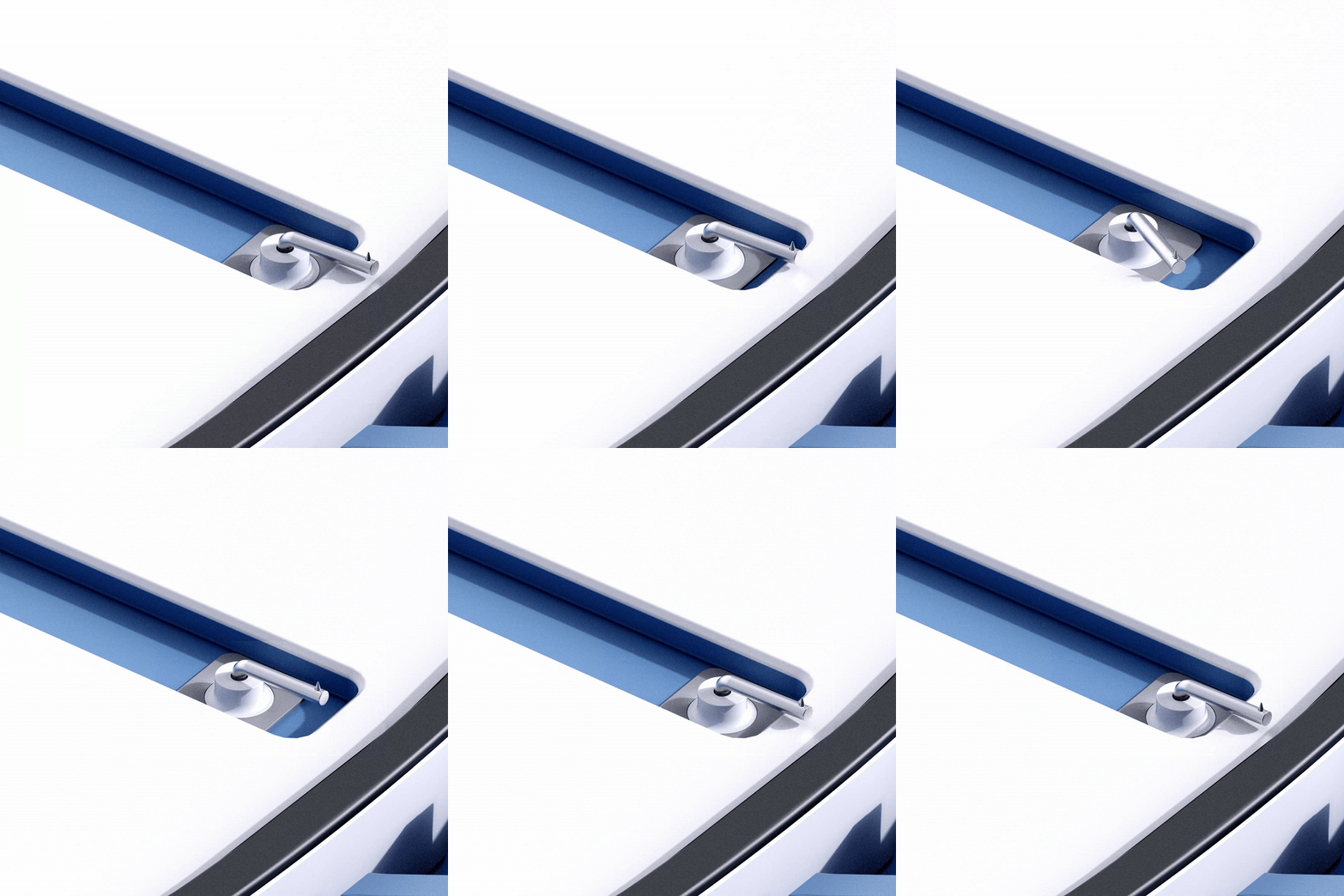
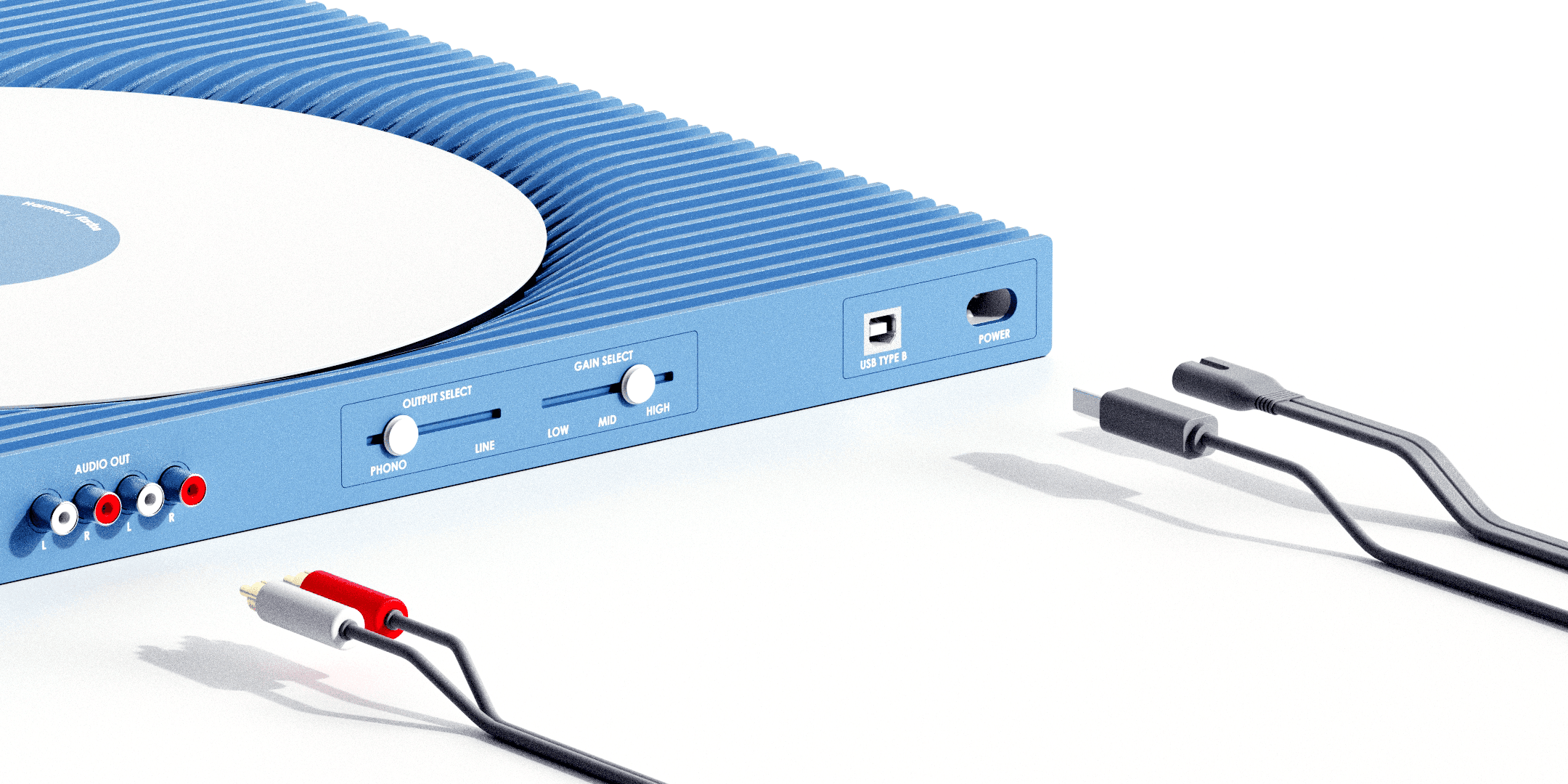
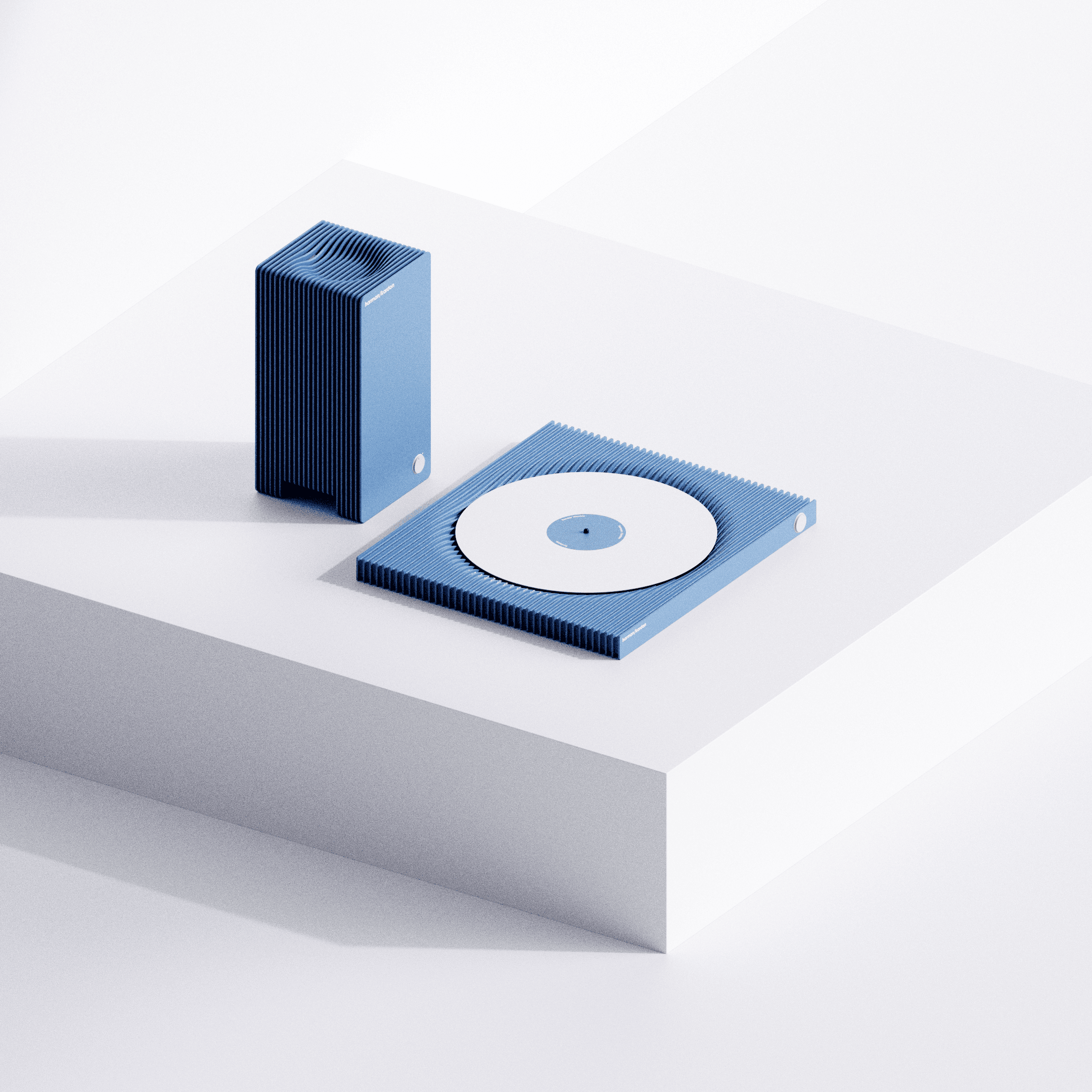
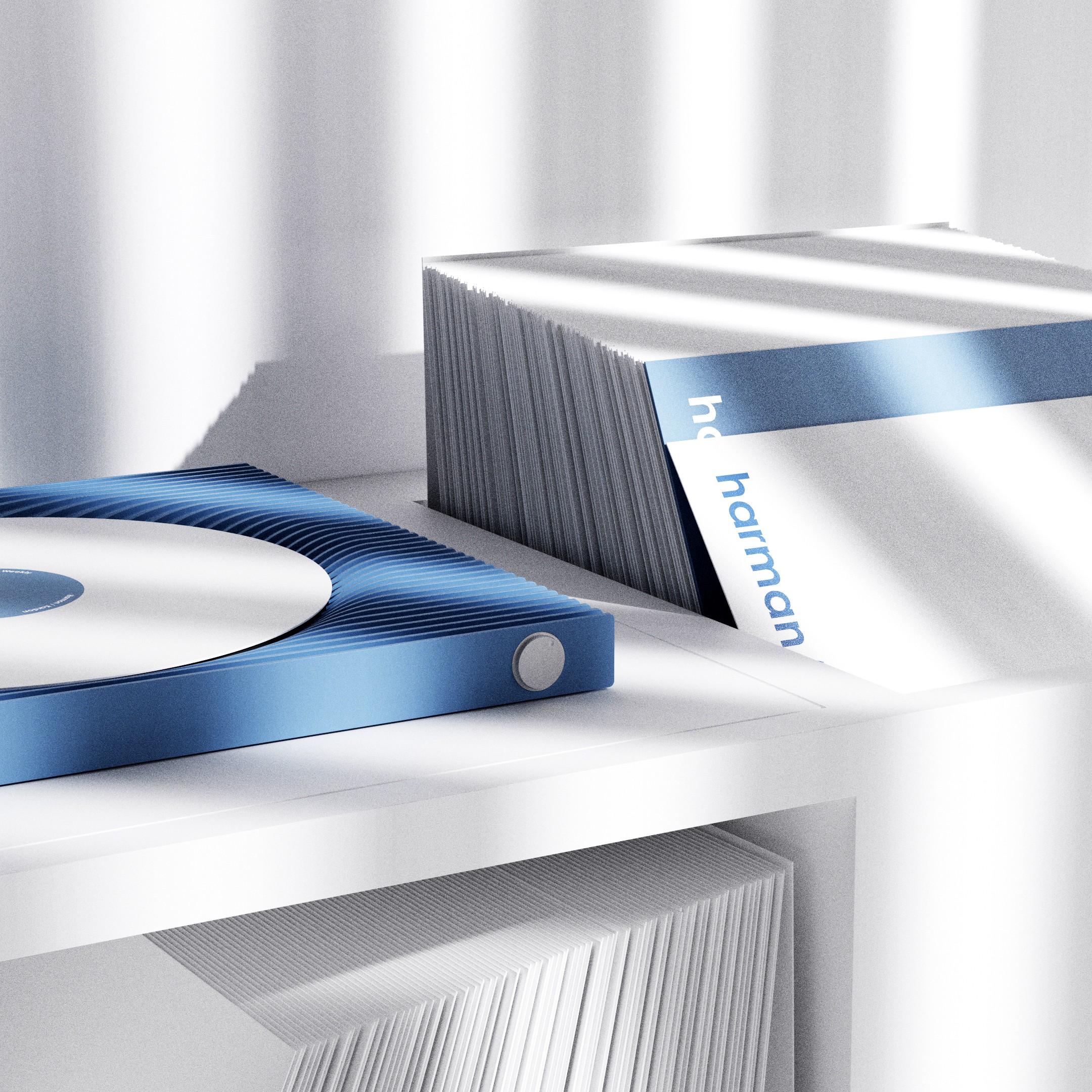
A central design focus of this turntable is the needle mechanism. Unlike much of the market, this turntable eliminates the traditional tonearm entirely. Instead, the needle is guided by a sliding belt system, beginning at the outermost edge of the record and gradually migrating inward, following the natural trajectory of the vinyl’s grooves.
The mechanism pivots about its axis, with a controlled range of motion limited to 30 degrees on either side. As playback progresses, the system advances inward organically, allowing the needle to complete its path across the record and sustain the listening experience from start to finish.
speaker
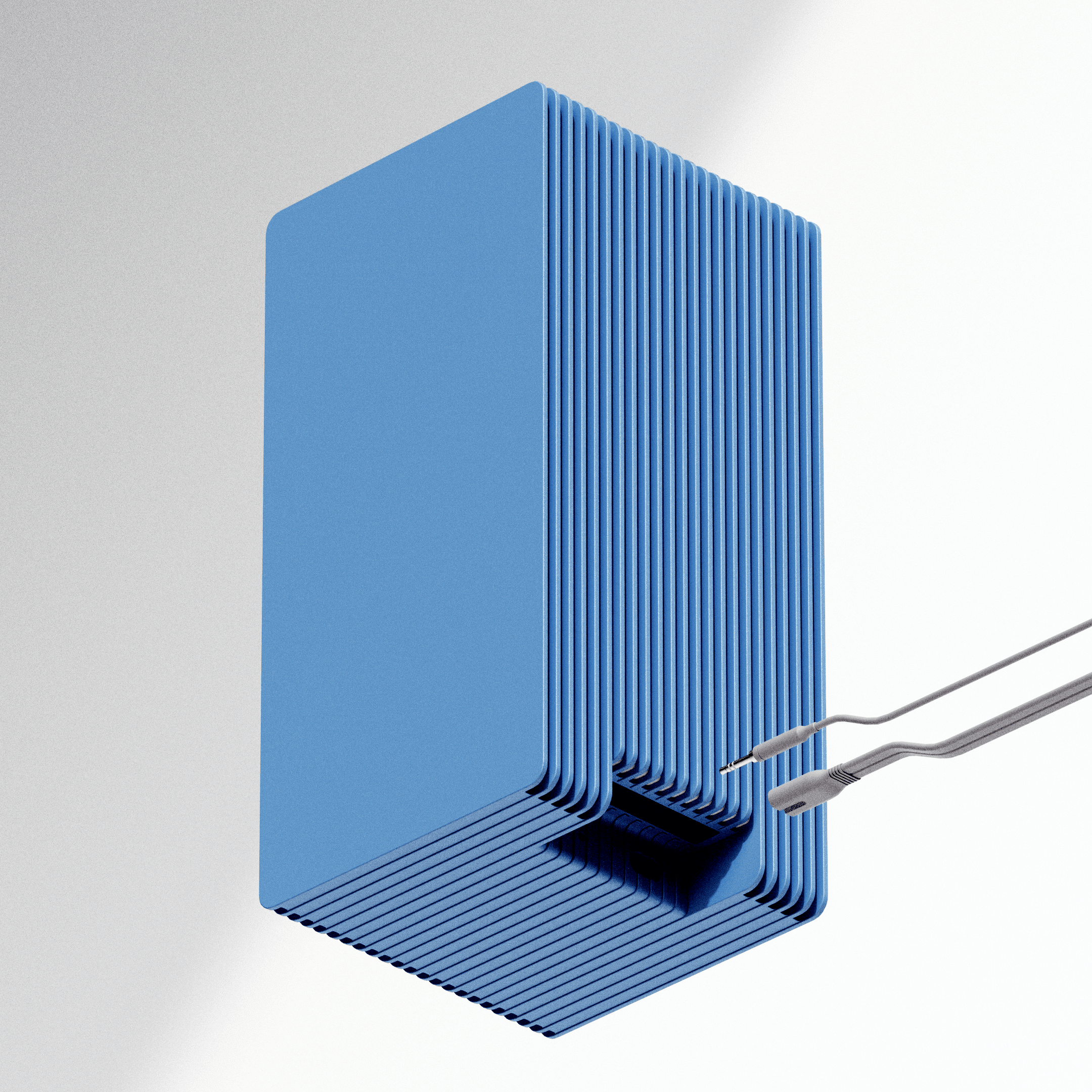
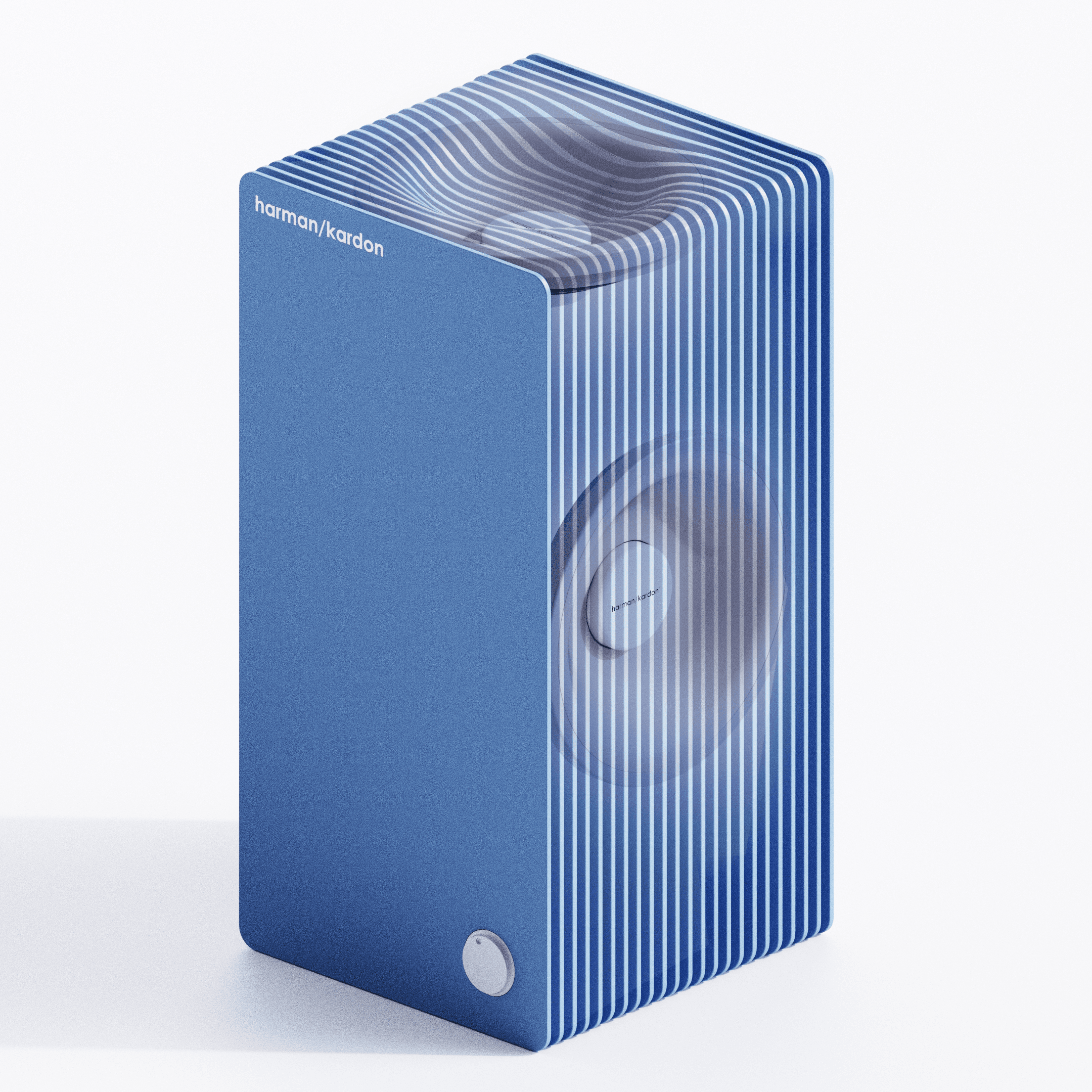
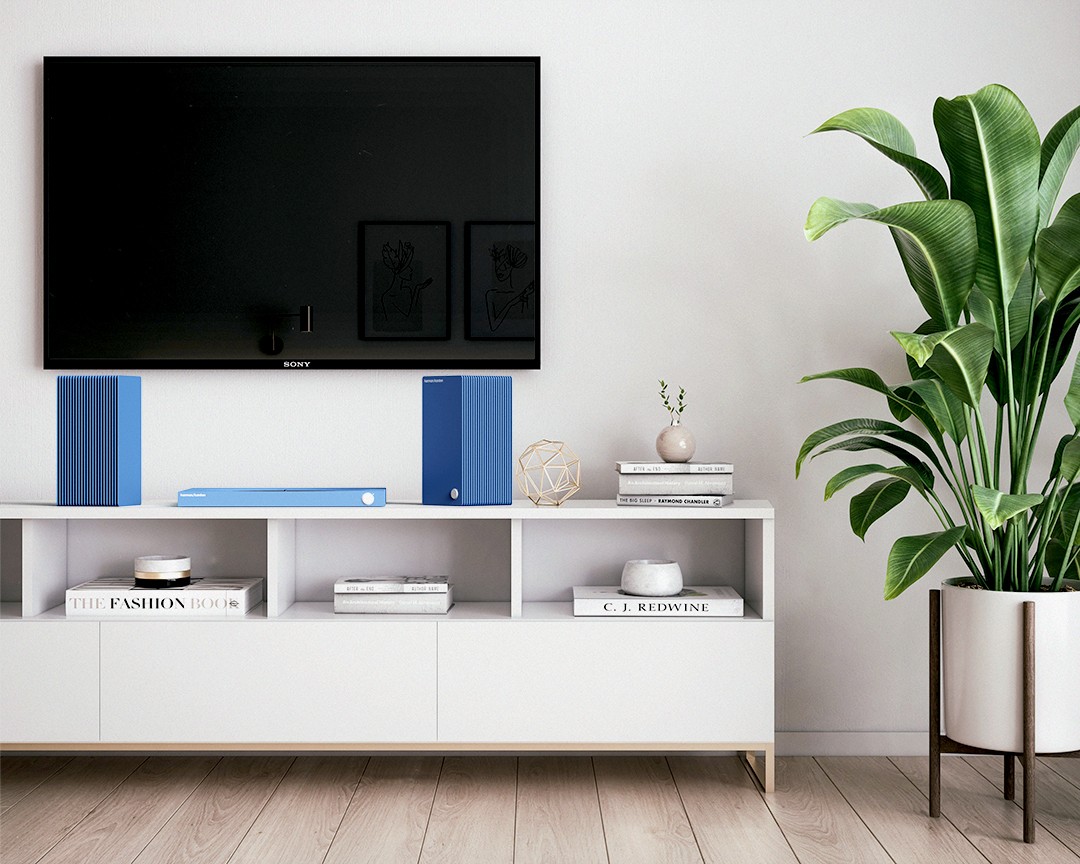
The turntable is only one part of the experience. Listening is another entirely. Sound must be heard, and that experience is completed through a set of speakers designed to live alongside the turntable.
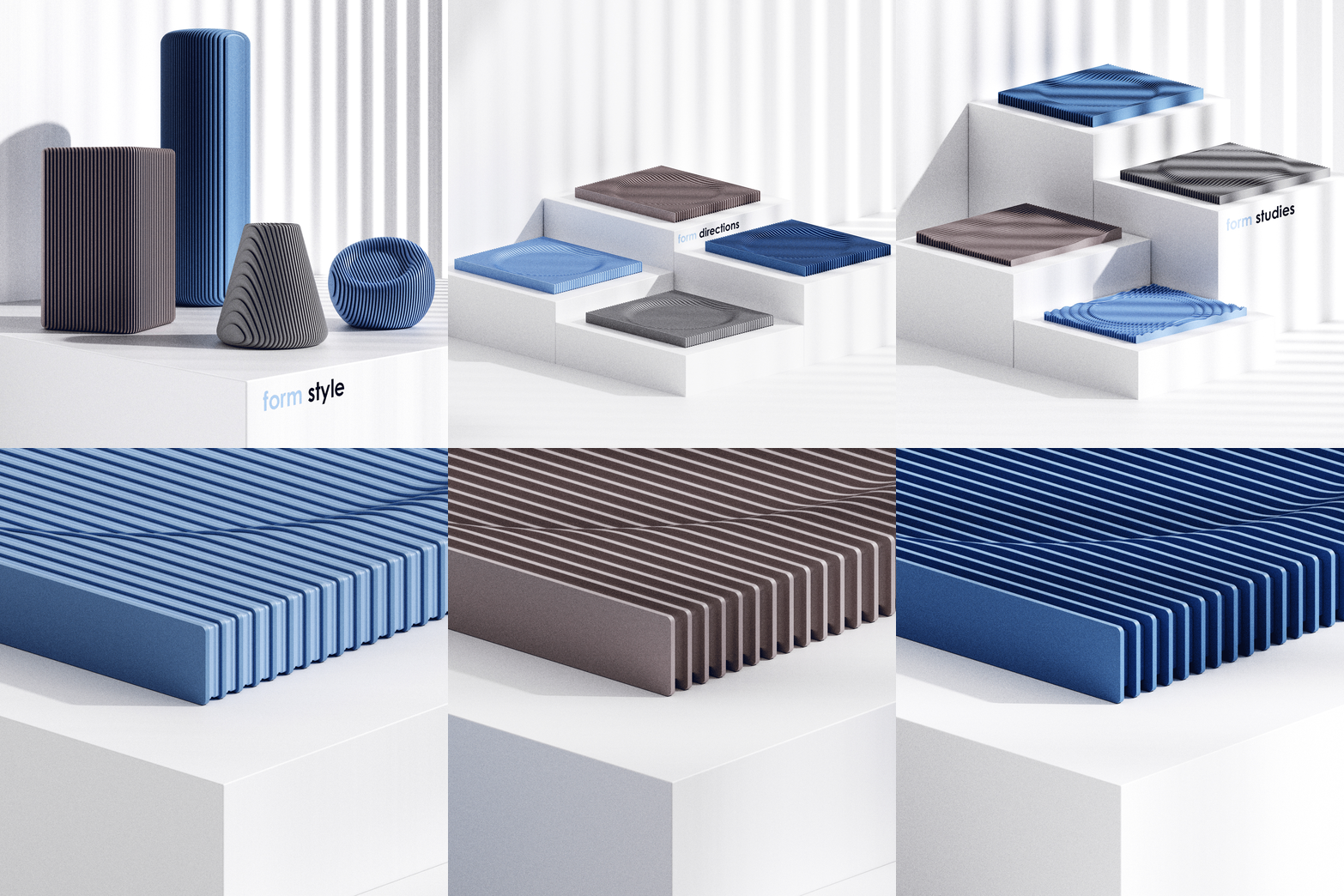
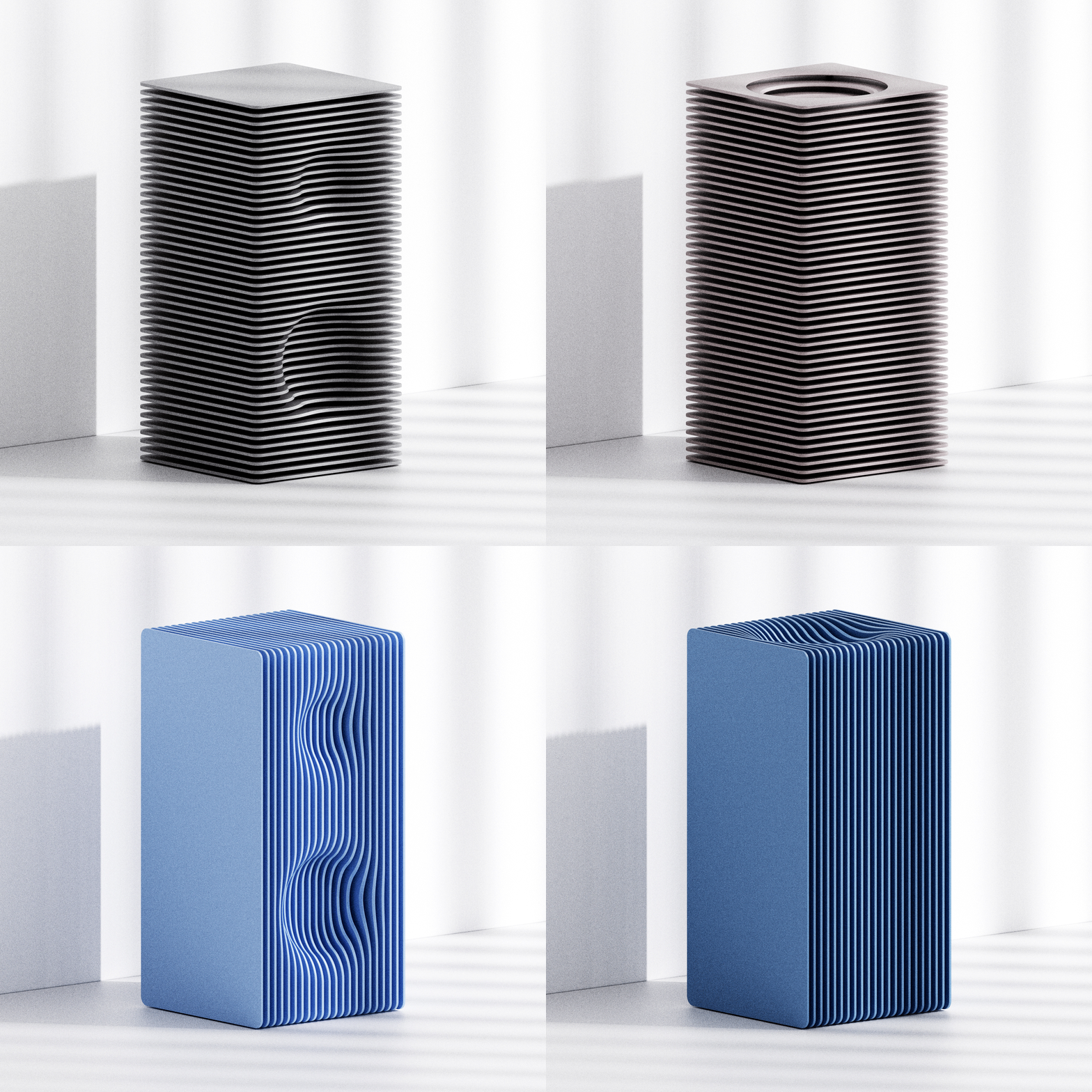
Through multiple formal explorations, it became clear that the most effective solution was a front-firing audio configuration. Sound is directed carefully and precisely through grooves that echo the geometry of the turntable itself, creating a cohesive relationship between form, function, and listening.
Industrial design
may 2021
team
Udhbav Bharadwaj
industrial designer